 how-to
How to Transition From Rapid Weight Loss to Keto Maintenance
Table of Contents
- How to Transition From Rapid Weight Loss to Keto Maintenance
- How Long to Stay in a Weight-Loss Phase
- What to Eat After Reaching Goal Weight
- The Keto Maintenance Phase: A Week-by-Week Plan
- How to Maintain Weight Loss After Keto
- Common Mistakes That Cause Weight Regain
- Frequently Asked Questions
Last Updated: October 16, 2026
How to Transition From Rapid Weight Loss to Keto Maintenance
Learning how to transition from rapid weight loss to keto maintenance is the step most people rush, and it is the step that decides whether the weight stays off. The hyper-ketosis eating protocol is not a standard keto diet. It runs three phases: phase one for rapid weight loss across 40 days, phase two to lock in that loss with 20 days of clean keto, and phase three for maintenance. At Hyper-Ketosis 101, the guidance is simple: you repeat phases one and two until you reach your goal weight, then move into maintenance. That final handover deserves a plan, not a guess.
The scale will move in ways that alarm you at first. That is expected, and understanding why is the difference between a calm transition and a panicked one.
How Long to Stay in a Weight-Loss Phase
Stay in the weight-loss phases until you reach your goal weight, then transition. There is no fixed calendar date that ends phase one and two; the endpoint is the result, not the clock.
Phase one runs for 40 days on two meals a day: one protein, one fruit, and three or more vegetables, with plenty of water and no oils, fats, or seeds. Movement stays gentle, limited to walking or swimming. Phase two follows with 20 days of clean keto to lock in the loss. If the goal is not met, the cycle repeats.
A common mistake is cutting the cycle short because the first weeks felt easy. The protocol is built as a complete unit for a reason.
What to Eat After Reaching Goal Weight
What to eat after reaching goal weight is where the hyper-ketosis approach separates itself from a standard keto diet. Maintenance is not "keto forever." It is a controlled, gradual widening of the food list while you watch the scale.
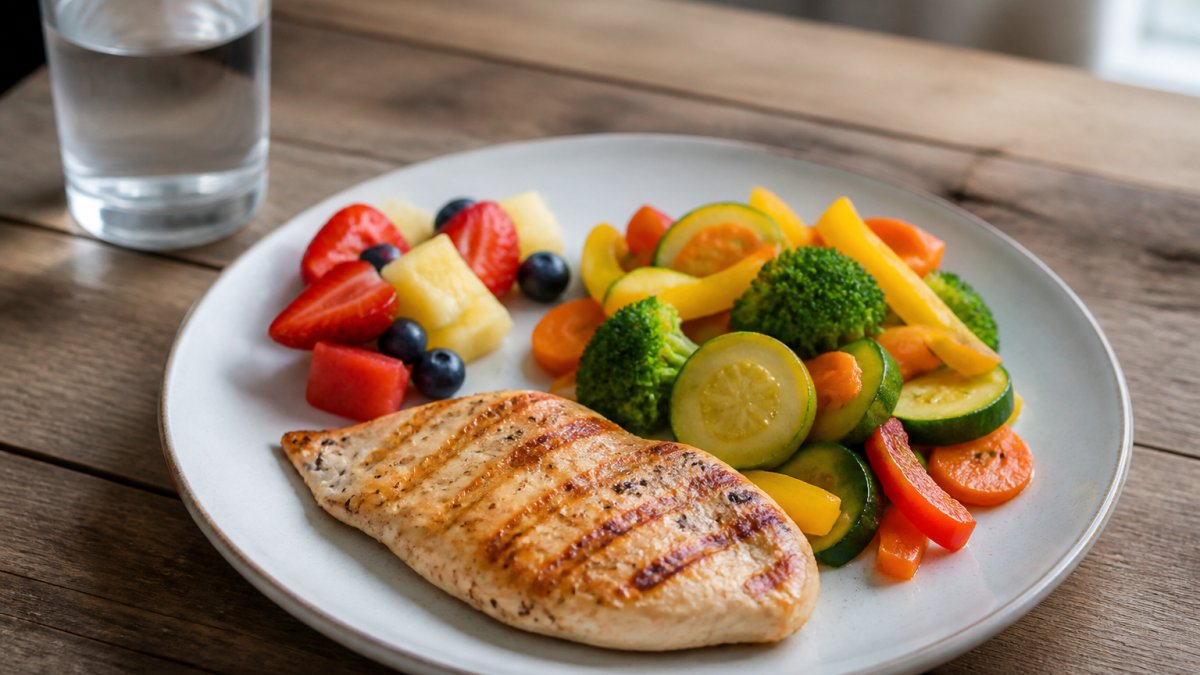
Start with the same structure that got you here: protein at every meal, vegetables filling most of the plate, fruit kept to a portion. Then reintroduce foods one at a time, not all at once, so you can see what your body tolerates. Whole foods first. Complex carbohydrates before refined ones. Home cooking over restaurant meals, because you control what goes in.
Portion sizes matter more than food choices in the first weeks of maintenance. The plate that produced rapid loss is not the plate that maintains it.
The Keto Maintenance Phase: A Week-by-Week Plan
The keto maintenance phase works best as a staged plan rather than an overnight switch. The table below maps the first month, but the real value is in the checkpoints: each week has a specific signal you are watching for, and a specific rule for what to do if the signal goes the wrong way.
| Week | Focus | What Changes | Checkpoint Signal | If the Signal Is Off |
|---|---|---|---|---|
| 1 | Hold steady | Keep phase two meals exactly as they are; add one extra vegetable portion at the larger meal | Weekly average weight rises more than 2-3 lb above goal | Do not cut food yet, this is almost always glycogen water. Hold the plan one more week. |
| 2 | Add one carb | Introduce a single complex carbohydrate (see list below) at one meal, roughly the size of your closed fist | Hunger spikes within 2 hours of that meal, or energy crashes mid-afternoon | Swap to a different carb from the list, or move it to the meal after your hardest activity of the day |
| 3 | Widen portions | Increase protein by about a palm-sized serving and vegetables by one handful at each meal | Weekly average weight climbs for two consecutive weeks | Trim fat first (cooking oils, fatty cuts), then trim the added carb, then trim portions, in that order |
| 4 | Settle and review | Keep what worked, drop what triggered cravings; lock in your personal maintenance plate | Weekly average weight stable inside your range for 7 straight days | If stable, this is your baseline. If not, repeat week 3 with a smaller carb portion. |
Complex carbohydrates to introduce, one at a time:
- Cooked oats (plain, not instant flavored packets)
- Sweet potato or yam, steamed or roasted without oil
- Brown rice or wild rice
- Quinoa
- Lentils or chickpeas
- Whole fruit you already ate in phase one, in a slightly larger portion
Introduce one item, wait three to four days, and note hunger, energy, digestion, and the weekly weight average before adding the next. This is slower than most people want, and it is the entire point, you are building a personal map of what your body tolerates in maintenance, not following a generic keto exit plan.
How to personalize the pace. Not everyone moves through these four weeks at the same speed. Use these rules:
- If you have more than 20 lb to lose before goal, or you have been in phase one and two for multiple cycles, extend each week to 10 days. Your body has more metabolic ground to cover.
- If you reached goal quickly and feel steady, you can compress weeks 1 and 2 into a single 10-day block, but never compress week 3 or week 4.
- If you have a medical condition, take medication that affects blood sugar or blood pressure, or have any history of disordered eating, do not self-pace this transition. Work with a registered dietitian or your clinician to set the checkpoints. The protocol's structure is a framework.
The first week is the hardest to read. Glycogen stores refill when carbohydrates return, and each gram of glycogen holds water with it, so the scale can rise even when fat is not returning. Track the weekly average, not the daily number.
How to Maintain Weight Loss After Keto
How to maintain weight loss after keto comes down to three numbers you set once and then defend: a weight range, a maintenance calorie estimate, and a weekly review day. Vague advice to 'monitor progress' is why most people drift, you need a repeatable method, not a feeling.
1. Set your weight range. Take your goal weight and build a band around it: roughly 3 lb below and 3 lb above. That is your green zone. Inside the green zone, you change nothing. This band exists because daily weight naturally fluctuates with water, sodium, hormones, and digestion, reacting to every reading is the fastest way to quit.
2. Estimate your maintenance calories. A workable starting method:
- Take your body weight in pounds and multiply by 13 to 15. That range can be a reasonable maintenance estimate for many adults.
- Start at the lower end if you are sedentary, the higher end if you walk or swim regularly (the movement the protocol already allows).
- Hold that number for two weeks and compare it to your weekly average weight. If the average is stable, that is your maintenance intake. If it is climbing, consider adjusting daily intake and re-test. If it is falling, consider adding to your daily intake.
This is an estimate, not a lab measurement. The two-week test is what makes it accurate for you.
3. Pick one weekly review day. Same day, same time, same scale. Write down the weekly average and one sentence about how the week felt, hunger, energy, cravings, sleep. That single sentence is what tells you whether a weight change is a food problem or a life problem.
Distinguishing water-weight rebound from fat regain. This is the skill that separates people who maintain from people who yo-yo. When you reintroduce carbohydrates, your body refills glycogen stores, and each gram of glycogen holds roughly 3 grams of water with it. A jump of 2-4 lb in the first week of maintenance is almost always this, not fat. Fat regain is different: it is slow, it accumulates over weeks, and it shows up in the weekly average, not the daily number.
When to adjust, and when to leave it alone.
- Weekly average inside your green zone → change nothing. Do not 'optimize' a working plan.
- Weekly average 3-5 lb above the green zone for two consecutive weeks → trim fat and portion sizes for a few days, then re-check.
- Weekly average more than 5 lb above the green zone, or climbing for three weeks → return to phase two meals for 20 days, then re-enter maintenance at week 1.
- Weekly average below the green zone → you are under-eating. Add a protein portion or a complex carb at one meal. Maintenance is not a second weight-loss phase.
This is where most people quit. They hit the goal, relax every rule at once, and lose the thread within a month. The three numbers above are what keep the thread intact without turning maintenance into another strict diet.
At Hyper-Ketosis 101, the planning and tracking tools exist for exactly this stage, so the adjustment is a glance rather than a calculation. The ebook, planner, cookbook combo is built for this kind of stage-by-stage tracking, and the CDC guidance on healthy weight and BMI offers a useful reference point for what a reasonable range looks like for your height.
Common Mistakes That Cause Weight Regain
Weight regain after rapid loss almost always traces back to a handful of predictable errors. Catching them early is easier than reversing them.
- Reading water weight as fat gain. Glycogen refill adds pounds that are not fat. Panic-restricting here starts a cycle.
- Reintroducing everything at once. One new food at a time tells you what works. A full menu does not.
- Dropping the structure entirely. Maintenance still needs protein, vegetables, and portions.
- Skipping the scale. Without weekly tracking, drift goes unnoticed until it is a project.
- Returning to old portion sizes. The plate that maintained a higher weight will rebuild it.
The NHS information on healthy eating reinforces what the protocol already assumes: sustainable eating is built on whole foods and consistent portions, not on extremes.
Frequently Asked Questions
How do you transition from rapid weight loss to maintenance?
Transition gradually over 2-4 weeks. Start by adding one small serving of complex carbohydrates per day, such as a piece of fruit or a serving of starchy vegetables. Monitor your weight. The goal is to find a sustainable intake that keeps your weight stable without feeling deprived.
What should you eat after reaching your goal weight on a keto-style plan?
After reaching your goal weight, focus on whole foods: lean proteins, non-starchy vegetables, healthy fats, and moderate portions of complex carbohydrates like berries, quinoa, or sweet potatoes. The Hyper-Ketosis 101 ebook, planner, and cookbook combo provides structured meal plans and tracking tools to help you build balanced meals during this phase.
How long should you stay in a weight-loss phase before moving to maintenance?
Stay in a weight-loss phase until you reach your goal weight, but not longer than needed. For the Hyper-Ketosis protocol, phase one lasts up to 40 days, followed by 20 days of phase two. If you haven't reached your goal, you can repeat phases one and two. Once at goal, transition to maintenance.
How can you maintain weight loss without regaining it?
Maintain weight loss by tracking your weight regularly. The keto maintenance phase emphasizes whole foods, portion control, and gradual reintroduction of carbohydrates. Tools like the Hyper-Ketosis 101 planner help you monitor progress and stay consistent, reducing the risk of weight regain.
Rapid loss is the easy part. Holding the result is the skill, and it needs a system rather than willpower. Hyper-Ketosis 101 builds that system into its 60-day bundle, with a structured three-phase approach, planning and tracking tools, and cookbook resources that keep maintenance as simple as the loss phase. Get started with Hyper-Ketosis 101 and keep the weight off for good.