 how-to
How to portion fruit in phase one of Hyper-Ketosis
Table of Contents
- What One Fruit Serving Looks Like in Phase One
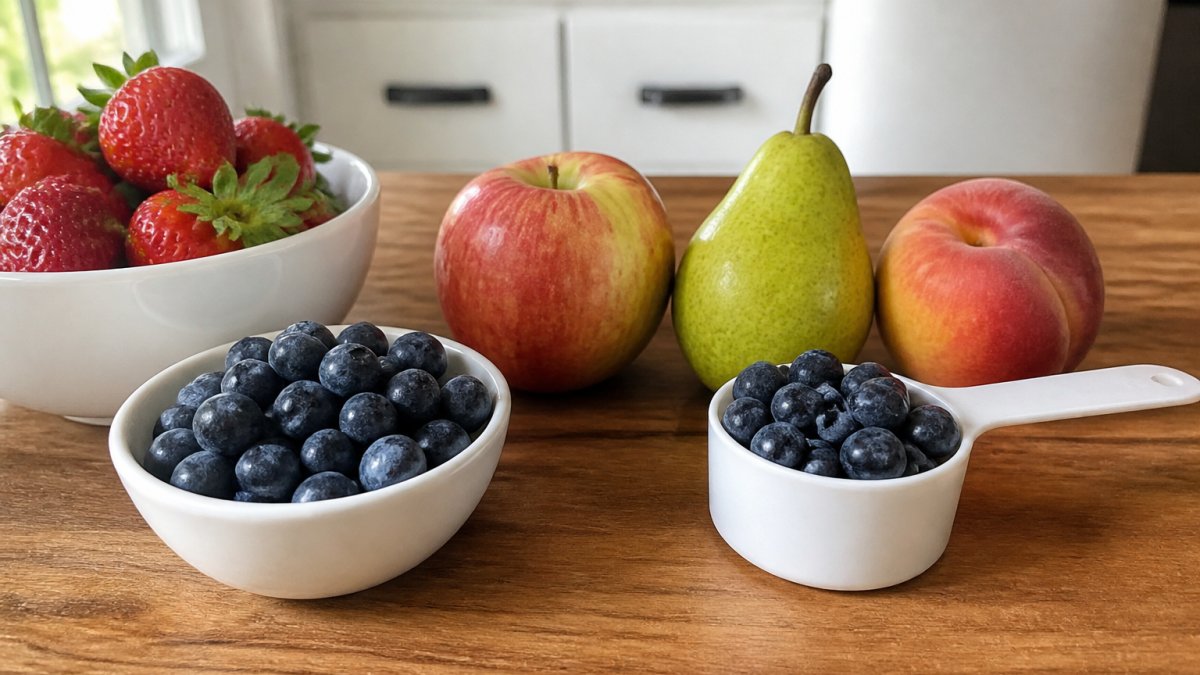
- Phase One Fruit Serving Size: Berries, Apples, Pears, and Peaches
- How to Portion Fruit Step by Step for Your Two Daily Meals
- The Hyper-Ketosis Phase One Food List and Where Fruit Fits
- Building a Phase One Meal Plan Around Your Fruit Serving
- Fruit Prep, Timing, and Common Portioning Mistakes
- Frequently Asked Questions
Last Updated: October 15, 2026
What One Fruit Serving Looks Like in Phase One
One fruit serving in phase one of Hyper-Ketosis is simple: a cup of berries or one medium apple, pear, or peach. This guide from Hyper-Ketosis 101 explains how to portion fruit on phase one diet without a scale or guesswork.
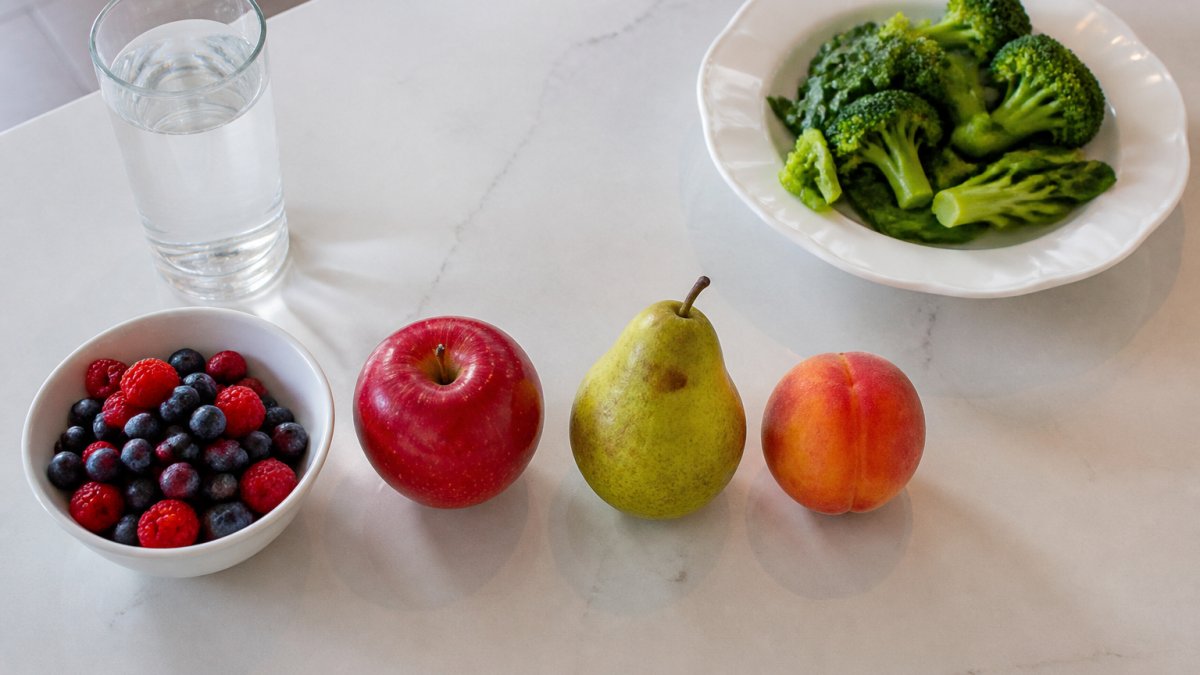
Phase one is not a keto diet. It is a hyper-ketosis eating protocol built around 40 days of two meals a day: one protein, one fruit, and three or more vegetables per meal. No oils, no fats, no seeds.
Fruit is the one sweet spot in that structure, and the easiest place to accidentally eat three servings instead of one.
The household equivalents that make portioning easy
No scale, no problem. These everyday objects match one phase one fruit serving:
- Berries: one cup, roughly the size of a closed fist
- Apple: one medium, about the size of a tennis ball
- Pear: one medium, same tennis-ball guide
- Peach: one medium, palm-sized
- Watermelon or melon: one cup cubed, about a cupped hand
- Grapes: one cup, a single layer in a small bowl
Phase One Fruit Serving Size: Berries, Apples, Pears, and Peaches
The phase one fruit serving size stays fixed: one cup of berries or one medium-sized apple, pear, or peach. There is no math to redo each day.
That fixed serving is what makes phase one work: two meals, one protein, one fruit, three or more vegetables. When the portion is already decided, there is nothing to negotiate with at 9pm.
A common mistake is treating "fruit" as a free food because it is natural. It is measured in phase one, the same way the protein and vegetables are measured.
Weighing and measuring without a scale
Use your hand and your kitchen. That is the entire method.
- Cup your hand into a bowl shape. That hollow holds about one cup of berries.
- Pick up the apple. If it fits comfortably in your palm, it is medium.
Consistency matters more than precision here. The same bowl, the same cup, the same hand every day.
How to Portion Fruit Step by Step for Your Two Daily Meals
Portioning takes about 30 seconds once the habit forms. Here is the exact sequence, with the measured equivalents and tracking method that make it repeatable.
Step-by-step portioning with household equivalents
- Decide the fruit first. Pick one cup of berries or one medium apple, pear, or peach for each of your two meals. In a fruit salad, every piece must fit into a single one-cup measure.
- Set the cup or the fruit on the counter. Do not portion over the fridge or the fruit bowl. A flat surface keeps the measurement honest.
- Measure once. One cup of berries, or one medium whole fruit. No topping up.
- Wash and cut before the meal. Prepped fruit gets eaten; whole fruit gets skipped. If you are having a peach, slice it before you sit down so the portion is visible on the plate.
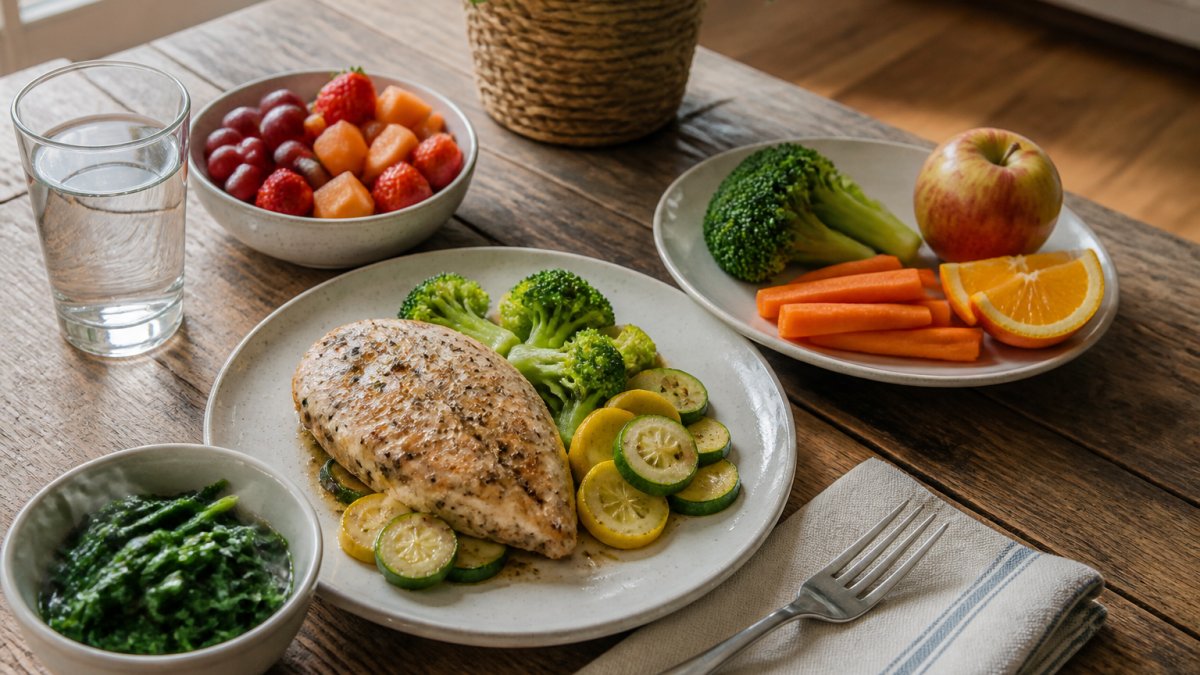
- Plate it with the protein and vegetables. One plate, one meal, done. Fruit sits beside the protein, not instead of it.
- Drink a full glass of water first. The water-first rule makes the meal feel complete and reduces the urge to add a second serving.
- Put the rest of the fruit away before sitting down. A bowl of peaches on the table becomes a second serving without anyone deciding to have one.
A simple tracker for your two daily fruit servings
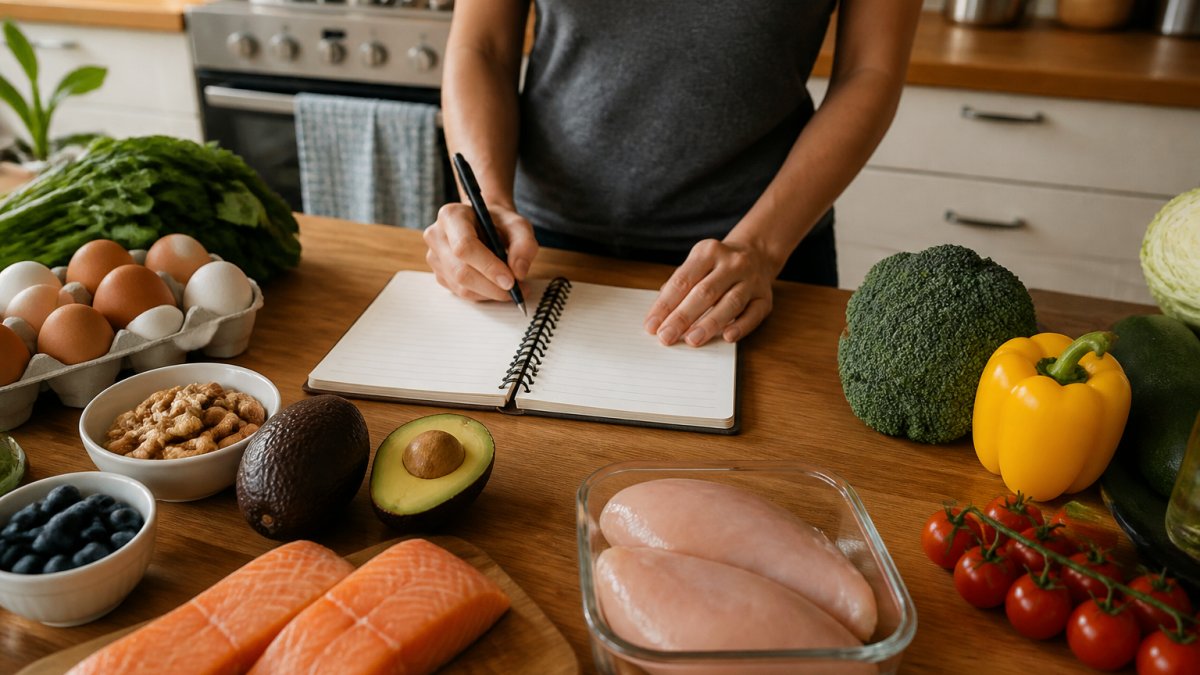
You do not need an app. A index card on the fridge works. Draw two columns, Meal 1 and Meal 2, and under each write the fruit you chose and a quick checkmark for the measure:
| Meal | Fruit choice | Measure used | Check |
|---|---|---|---|
| Meal 1 | Strawberries | 1 cup | ✓ |
| Meal 2 | Apple | 1 medium (tennis-ball size) | ✓ |
At the end of the day, two checks means you hit your two fruit servings. Three checks means you added a snack serving, which slows the rapid weight loss phase.
How to adapt portions to your appetite without breaking the rule
The phase one fruit serving is fixed: one cup of berries or one medium apple, pear, or peach. You do not adjust it based on hunger, only which fruit you choose. If you are hungrier, choose berries: one cup of strawberries or blueberries has more volume and fibre than a medium apple. If you want something that takes longer to eat, slice a pear or peach into thin wedges. The serving stays the same; the experience changes.
The Hyper-Ketosis Phase One Food List and Where Fruit Fits
The Hyper-Ketosis phase one food list is short and strict. Each meal has three parts: one protein, one fruit, three or more vegetables.
Where fruit fits is straightforward. It sits beside the protein, not on top of it and not instead of it.
| Meal Component | Phase One Serving | Examples |
|---|---|---|
| Protein | One serving per meal | Grilled chicken, fish, eggs, lean meat |
| Fruit | One cup berries or one medium apple, pear, or peach | Blueberries, strawberries, apple, pear, peach |
| Vegetables | Three or more per meal | Leafy greens, cucumber, courgette, broccoli, peppers |
| Water | Throughout the day | Plain water, no sweetened drinks |
| Oils, fats, seeds | Not allowed in phase one | No cooking oils, butter, nuts, or seeds |
Fruit is the only sweet item on the list, which is why portion control matters. Dried fruit, fruit juice, canned fruit in syrup, and smoothies are not allowed, they concentrate sugar and remove the fibre that makes whole fruit filling. Fresh whole fruit is the standard.
Building a Phase One Meal Plan Around Your Fruit Serving
A phase one meal plan is built backwards from the fruit. Pick the fruit for both meals first, then match the protein and vegetables around it. Once the fruit is set, the rest of the plate falls into place quickly. Two meals a day, two fruit servings a day, that is the ceiling for phase one.
A sample two-meal day with fruit in both meals
Here is what a full day looks like:
Meal 1
- Protein: two eggs, cooked without oil
- Fruit: one cup of strawberries
- Vegetables: spinach, cucumber, and tomato
- Water: one full glass before eating
Meal 2
- Protein: grilled chicken breast
- Fruit: one medium apple
- Vegetables: steamed broccoli, courgette, and peppers
- Water: one full glass before eating, plus water through the evening
No snacks, no oils, no fats, no seeds. Walking or swimming is fine. Nothing more strenuous.
Fruit selection and preparation: what counts and what does not
Not all fruit forms are equal in phase one. The strict food list allows whole, fresh fruit, but changing its form changes how much you are actually eating.
- Whole fruit: This is the standard. One cup of berries or one medium apple, pear, or peach. The fibre is intact, the water content is high, and the serving is visible on the plate.
- Fruit salad: Works only if every piece is measured into a single one-cup serving.
- Dried fruit: Not allowed in phase one. Drying removes water and concentrates sugar. A small handful of raisins can equal a full cup of grapes in sugar, but without the volume that makes you feel full.
- Fruit juice: Not allowed. Juice removes the fibre and packs several servings into one glass, even fresh-squeezed.
- Smoothies: Not allowed. Blending breaks down fibre and makes fruit drinkable, so you consume more before your body registers fullness.
- Canned fruit: Not allowed if packed in syrup. If you cannot find fruit in its own juice and you are in phase one, choose fresh or frozen whole fruit instead.
Frozen berries are a practical exception: freeze them in single-cup portions, and they thaw into a measured serving that works in the phase one structure.
When fruit comes back in later phases
Phase one is 40 days of rapid weight loss with two meals a day, one protein, one fruit, and three or more vegetables. Then comes phase two, 20 days of a clean keto diet to lock in the weight loss, where fruit shifts to lower-sugar options guided by the keto framework, not the phase one one-cup rule.
For anyone who wants the full structure laid out rather than assembled by hand, the Hyper-Ketosis 101 ebook, planner, and cookbook combo puts the phase one food list, the two-meal framework, and the tracking pages in one place.
Fruit Prep, Timing, and Common Portioning Mistakes
Prep and timing decide whether the portion holds. Wash fruit the day it comes home. Cut melon into cubes and store them in a single-cup container. Keep berries at eye level in the fridge, not buried at the back. Eat fruit with the meal, not before or after it, phase one meals are built as one plate, and the fruit belongs on that plate.
The mistakes repeat in a predictable pattern:
- Eating fruit as a snack. Phase one is two meals a day. Snacking adds a third fruit serving.
- Choosing juice or smoothies. Both remove fibre and pack several servings into one glass.
- Using a bigger bowl over time. Portion creep is slow and invisible. Use the same cup every day.
- Skipping the fruit serving entirely. Fruit is part of the phase one plan, not an optional extra.
- Swapping fruit for extra protein. One protein, one fruit, three or more vegetables. The structure is the point.
Weight loss in phase one comes from the whole pattern: two meals, measured portions, plenty of water, and no added fats. Fruit is a fixed part of that pattern.
Frequently Asked Questions
How much fruit can you eat in phase one of Hyper-Ketosis?
Phase one runs on two meals a day, and each meal includes one fruit serving. That means one serving of fruit per meal, two servings across the day. One serving is a cup of berries or a medium apple, pear, or peach. Fruit is not a snack between meals in phase one, and it does not replace the protein or the three or more vegetables that go with each meal.
What counts as one fruit serving in phase one?
One serving is a cup of berries or a single medium apple, pear, or peach. Berries include strawberries, blueberries, raspberries, and blackberries. A medium apple, pear, or peach is roughly the size of a closed fist. Larger fruit still counts as one serving, so if you pick a very big apple, eat it as your whole serving rather than adding berries on top.
Is a cup of berries one serving of fruit?
Yes. A cup of berries is exactly one serving in phase one. Use a measuring cup the first few times so you can see what a cup looks like in your own bowl, then you can judge it by eye. Frozen berries work the same way, measured while frozen. Berries are the easiest fruit to portion because a cup fills a small bowl neatly.
Which fruits are allowed in phase one of Hyper-Ketosis?
Phase one allows berries, apples, pears, and peaches. These are the fruits on the hyper-ketosis phase one food list, and they are the only fruits that count toward your serving. Bananas, mangoes, and papaya are not part of phase one. Keep fruit fresh or frozen without added sugar, and skip canned fruit in syrup, dried fruit, and fruit juice.
Phase one works when the rules are simple enough to follow on a bad day. Fruit is the easiest rule to break by accident, and the easiest to fix with one cup or one medium piece. Hyper-Ketosis 101 builds the whole protocol into a single system: a structured 60-day plan, a phase one food list with no guesswork, and planning and tracking tools that keep two meals a day on schedule. Get started with Hyper-Ketosis 101 and run phase one the way it was designed.