 how-to
Keto Meal Planning for Beginners: A Simple 7-Day Start
Table of Contents
- What You Need Before You Start: Keto Meal Planning Basics
- Keto Food List for Beginners: What to Eat and What to Skip
- 7-Day Keto Meal Plan for Beginners: Your First Week
- Keto Meal Plan with Shopping List: What to Buy
- Keto Meal Prep for Beginners: Batch-Cooking and Storage
- Managing the Transition: What to Expect in Your First Two Weeks
- Staying Consistent: Tracking Progress and Adjusting Your Plan
- Conclusion
- Frequently Asked Questions
Last Updated: October 10, 2026
What You Need Before You Start: Keto Meal Planning Basics
Starting keto meal planning for beginners requires understanding three foundational concepts before you build your first week of meals. Most people jump straight to recipes without this groundwork, which is why they struggle to stay consistent.
At Hyper-Ketosis 101, we recommend starting with net carbs, macro targets, and daily carb limits. These three elements form the backbone of every successful meal plan.
Understanding Net Carbs and Your Daily Limit
Net carbs are the carbohydrates your body actually digests. You calculate them by subtracting fiber from total carbohydrates.
Here's the math: Total Carbs minus Fiber equals Net Carbs.
Most beginners aim for 20-50 grams of net carbs daily. Some people go higher once they're adapted.
Start at the lower end (20-30g) for the first two weeks. This helps your body transition faster.
Setting Your Macro Targets
Macros are the three nutrients that make up your calories: protein, fat, and carbohydrates. Keto flips the traditional ratio on its head.
A typical keto macro breakdown looks like this:
- Fat: 70-75% of calories
- Protein: 20-25% of calories
- Carbs: 5-10% of calories
Here's why this matters: fat keeps you full longer. Protein preserves muscle. Low carbs trigger ketosis.
Most beginners don't need to count every calorie obsessively. Focus on hitting your carb target first. The fat and protein tend to fall into place naturally when you choose the right foods.
Keto Food List for Beginners: What to Eat and What to Skip
Your food choices determine whether keto meal planning for beginners works or fails. Choosing the right proteins, fats, and vegetables makes everything else simple.
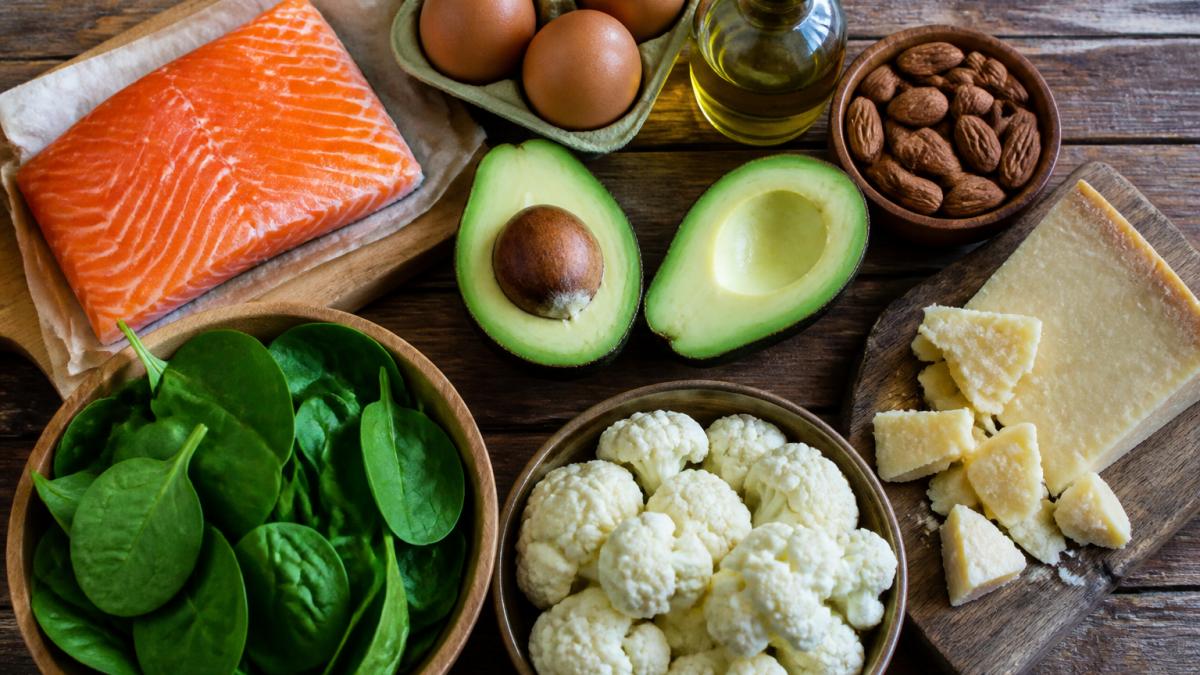
Protein Sources: Eggs, Fish, Poultry, and Meat
Protein is non-negotiable on keto. It keeps your muscles intact and your appetite controlled.
Best protein choices:
- Eggs (any preparation)
- Salmon and fatty fish
- Chicken thighs (not just breast)
- Beef, pork, and lamb
Eggs are the keto beginner's best friend. They're cheap, versatile, and contain zero net carbs.
Fish matters because it provides omega-3 fats your body needs. Salmon, mackerel, and sardines are ideal.
Chicken thighs beat chicken breast for keto. The thighs contain more fat, which keeps you satisfied longer.
Healthy Fats: Avocado, Oils, Nuts, and Seeds
Fat isn't the enemy on keto, it's your fuel. You need healthy fats at every meal.
Essential fat sources:
- Olive oil and avocado oil
- Avocados
- Nuts and seeds
- Butter and ghee
Avocados deserve special mention. Half an avocado contains 1 gram of net carbs and 12 grams of healthy fat.
Olive oil should be your default cooking oil. Use it generously on salads and cooked vegetables.
Nuts and seeds work as snacks, but portion control matters.
Low-Carb Vegetables and Foods to Limit
Vegetables aren't all created equal on keto. Some are keto-friendly. Others will kick you out of ketosis instantly.
Low-carb vegetables to eat freely:
- Spinach and leafy greens
- Cauliflower and broccoli
- Zucchini and cucumber
- Bell peppers
Vegetables to limit or avoid:
- Potatoes and sweet potatoes
- Corn
- Carrots
- Peas
The rule is simple: if it grows underground or is starchy, it's probably too high in carbs. Leafy greens and cruciferous vegetables are your friends.
Cauliflower is the keto vegetable MVP. It replaces rice, potatoes, and pasta. Roasted cauliflower has almost no net carbs and tastes great.
7-Day Keto Meal Plan for Beginners: Your First Week
Your first week of keto meal planning for beginners sets the tone for everything that follows. This simple seven-day plan keeps meals repeatable and stress-free.
Sample Breakfast, Lunch, and Dinner Ideas
Day 1:
- Breakfast: Three eggs fried in butter with cheese
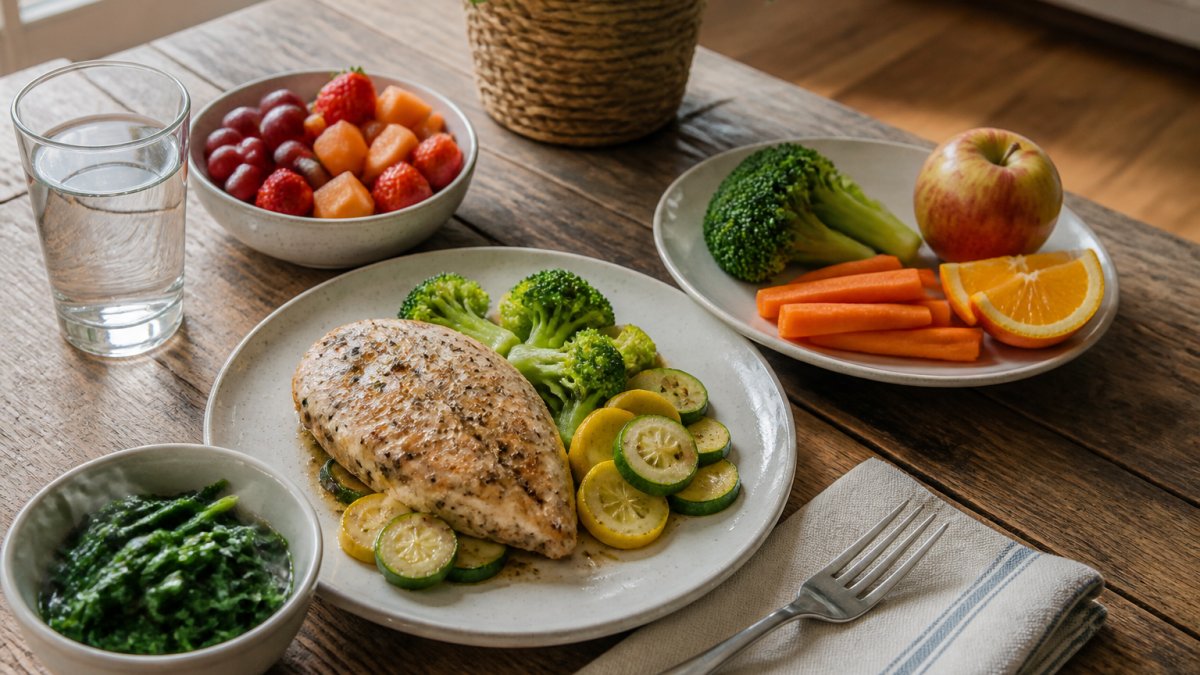
- Lunch: Grilled chicken thigh with roasted broccoli and olive oil
- Dinner: Salmon with asparagus and lemon butter
Day 2:
- Breakfast: Spinach and cheese omelet
- Lunch: Beef burger (no bun) with avocado and lettuce
- Dinner: Pork chops with cauliflower mash
Day 3:
- Breakfast: Two eggs with bacon and avocado
- Lunch: Tuna salad with olive oil dressing
- Dinner: Chicken thigh with roasted zucchini
Day 4:
- Breakfast: Cheese and spinach scramble
- Lunch: Ground beef with mushrooms and onions
- Dinner: Baked mackerel with green beans
Day 5:
- Breakfast: Eggs and sausage
- Lunch: Chicken salad with mayo and celery
- Dinner: Lamb chops with roasted cauliflower
Day 6:
- Breakfast: Frittata with peppers and cheese
- Lunch: Steak with butter and asparagus
- Dinner: Shrimp with garlic oil and broccoli
Day 7:
- Breakfast: Bacon and eggs
- Lunch: Pork roast with cauliflower rice
- Dinner: Baked white fish with Brussels sprouts
Snack Suggestions and Beverage Choices
Snacks aren't always necessary on keto. Many people find they eat less frequently because fat keeps them full. But when hunger strikes, have options ready.
Keto-friendly snacks:
- Cheese cubes or string cheese
- Almonds or macadamia nuts
- Pepperoni slices
- Hard-boiled eggs
Best beverages:
- Water (drink plenty)
- Coffee and tea
- Sparkling water
- Diet sodas (occasional, not daily)
Avoid sugary drinks completely. They spike insulin and kick you out of ketosis. Many people find coffee with butter or coconut oil keeps them satisfied until lunch.
Keto Meal Plan with Shopping List: What to Buy
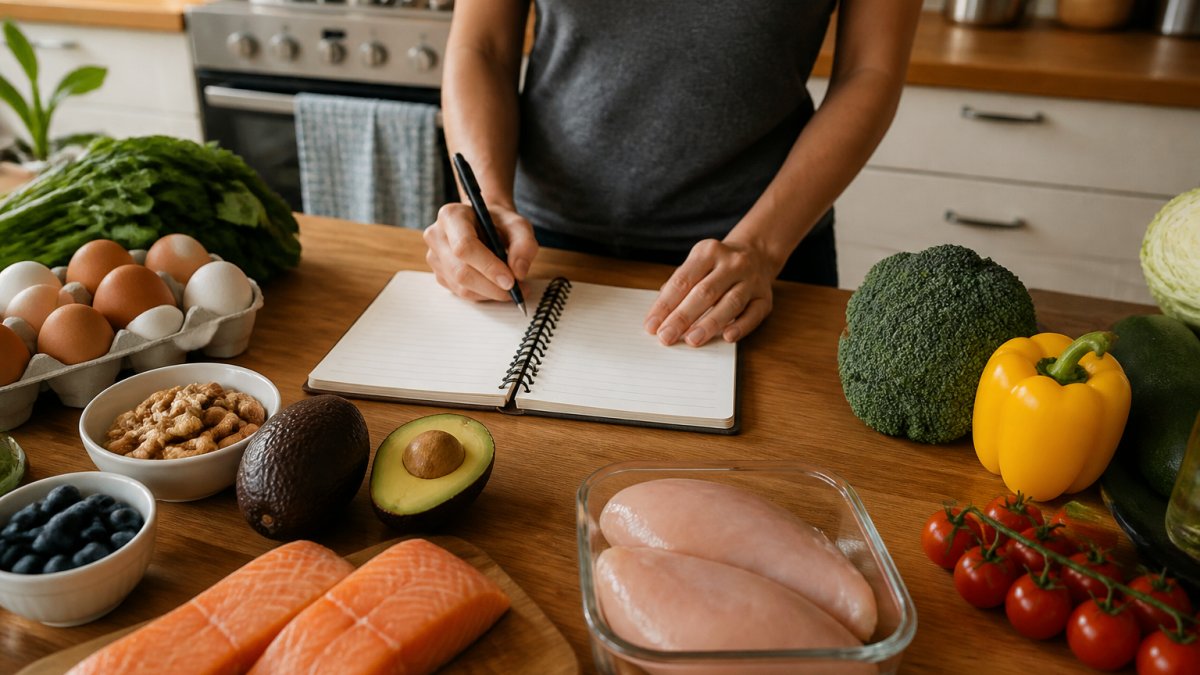
A solid shopping list removes the guesswork from grocery day. This is where keto meal planning for beginners becomes practical and actionable.
Building Your Shopping List by Category
Proteins:
- Eggs (1-2 dozen)
- Ground beef (2 lbs)
- Chicken thighs (2-3 lbs)
- Salmon fillets (1-2 lbs)
- Pork chops or roast (2 lbs)
Vegetables:
- Fresh spinach
- Broccoli
- Cauliflower
- Zucchini
- Mushrooms
Fats and Oils:
- Olive oil
- Butter
- Avocados (3-4)
- Nuts (almonds, macadamia)
- Cheese (cheddar, mozzarella, cream cheese)
Pantry Staples:
- Salt and pepper
- Garlic
- Lemon juice
- Vinegar
- Spices you enjoy
Budget-Conscious Shopping and Ingredient Reuse
Keto doesn't have to be expensive. The key is buying versatile ingredients you use multiple ways throughout the week.
Smart shopping strategies:
- Buy eggs in bulk, they're cheap and appear in every meal
- Choose chicken thighs over breasts (same price, more flavor and fat)
- Buy whole vegetables, not pre-cut
- Use the same proteins across multiple meals
- Buy store brands instead of premium labels
Ingredient reuse matters. If you buy cauliflower, use it roasted one day, mashed another day, and in a stir-fry the third day.
Eggs appear in breakfast, but also work for lunch salads or quick dinners. Ground beef becomes burger patties, taco filling, or meatballs.
Keto Meal Prep for Beginners: Batch-Cooking and Storage
Meal prep removes daily cooking decisions. Set aside two hours on Sunday, and you've got meals ready for the week ahead.
Step-by-Step Meal Prep Process
Step 1: Plan your proteins Decide what proteins you'll cook. Pick two or three options.
Step 2: Cook proteins in bulk Bake chicken thighs at 425°F for 25 minutes.
Step 4: Portion into containers Use glass containers with lids.
Step 5: Label and refrigerate Write the date on each container.
This takes about two hours but saves you from cooking daily.
Food Safety and Storage Guidelines
Proper storage keeps your meals safe and fresh throughout the week.
Storage rules:
- Cooked proteins last 3-4 days refrigerated
- Cooked vegetables last 4-5 days refrigerated
- Use glass containers, not plastic (they keep food fresher)
- Store fats separately if possible (butter doesn't need to touch vegetables)
- Label everything with the date
Freezing extends shelf life. If you prep for eight days instead of four, freeze half the containers. Thaw them the night before you need them.
Reheating is simple. Pop a container in the microwave for 2-3 minutes, or reheat on the stovetop. The quality stays good.
Managing the Transition: What to Expect in Your First Two Weeks
Your body doesn't switch to keto overnight. The first two weeks feel different. Understanding what's normal helps you push through.
Common Side Effects and How to Address Them
Fatigue (Days 1-5): Your body is switching fuel sources. This is temporary.
Headaches: Often caused by dehydration or electrolyte imbalance.
Brain fog: Your brain adapts to using ketones instead of glucose.
Appetite changes: You might feel less hungry. This is normal.
Digestive changes: Your gut bacteria adapt. Increase fiber from low-carb vegetables. Drink plenty of water.
These symptoms usually fade by day 7-10.
Staying Consistent: Tracking Progress and Adjusting Your Plan
Consistency beats perfection. The goal is maintaining keto meal planning for beginners as a sustainable lifestyle, not a short-term diet.
Track these metrics:
- How you feel (energy, mood, focus)
- Your hunger levels
- Clothing fit
- Weekly weigh-ins (optional)
Adjust your plan if:
- You're constantly hungry (add more fat)
- You have no energy (check your electrolytes)
- You're bored with meals (swap proteins or vegetables)
- You hit a plateau (vary your macros slightly)
Most people find their rhythm within four weeks. After that, keto becomes automatic. You stop thinking about it and just eat.
Conclusion
Keto meal planning for beginners doesn't require complicated calculations or exotic ingredients.
Many people struggle with consistency because they try to do too much at once.
Hyper-Ketosis 101 provides structured guides, planning tools, and tracking resources designed specifically for beginners navigating this transition.
The first two weeks determine whether you stick with keto or abandon it. Give yourself grace during the transition.
According to the Academy of Nutrition and Dietetics, very low carbohydrate diets like keto can produce rapid initial weight loss, though long-term success depends on individual adherence and metabolic factors.
Research from Harvard Medical School's nutrition resources emphasizes the importance of electrolyte balance during low-carb transitions, particularly sodium, potassium, and magnesium supplementation.
The National Institutes of Health's clinical guidelines note that ketogenic approaches may affect medication efficacy and require medical supervision for individuals with certain health conditions, particularly diabetes.
| Meal Prep Task | Time Required | Storage Duration | Best Day to Prep |
|---|---|---|---|
| Cook proteins | 30 minutes | 3-4 days | Sunday |
| Prepare vegetables | 20 minutes | 4-5 days | Sunday |
| Portion into containers | 10 minutes | As stored | Sunday |
| Label and refrigerate | 5 minutes | Check weekly | Sunday |
Frequently Asked Questions
What should I eat the first week of keto?
Focus on protein sources like eggs, fish, and chicken; healthy fats from avocado, olive oil, and nuts; and low-carb vegetables such as spinach and cauliflower. Keep net carbs under 20-50g daily. Avoid bread, pasta, sugar, and processed foods. A sample first day: scrambled eggs with cheese for breakfast, grilled salmon with asparagus for lunch, and chicken with cauliflower rice for dinner. Drink plenty of water and sugar-free beverages. Consistency matters more than perfection, stick to whole foods you enjoy.
How do beginners plan keto meals for a week?
Start by setting your daily carb limit (typically 20-50g net carbs for beginners). Choose 2-3 breakfast options, 2-3 lunch options, and 2-3 dinner options you enjoy. Write them down or use a planning tool. Assign meals to each day, accounting for variety. Create a shopping list grouped by category: proteins, fats, vegetables, and dairy. Buy enough ingredients for the week. Prep 2-3 meals on Sunday for the first few days. Adjust portions and meals as you learn what works for your body and schedule.
What foods should beginners buy for a keto meal plan?
Proteins: eggs, salmon, chicken breast, ground beef, pork. Fats: olive oil, avocado, almonds, walnuts, macadamia nuts, coconut oil, butter. Vegetables: spinach, cauliflower, broccoli, zucchini, bell peppers, asparagus. Dairy: cheese, full-fat yogurt, heavy cream. Pantry staples: salt, spices, sugar-free condiments. Beverages: water, unsweetened tea, black coffee. Avoid: bread, pasta, rice, sugar, most processed foods. Start with budget-friendly proteins like eggs and chicken, and reuse vegetables across multiple meals to save money.
How many meals a day should you eat on keto?
Most beginners eat 2-3 meals daily on keto. Some skip breakfast (intermittent fasting) and eat lunch and dinner; others prefer three meals. Listen to your hunger cues, keto often reduces appetite naturally. Include protein and healthy fats at each meal to stay full longer. Snacks are optional; many find they don't need them on keto. If you do snack, choose cheese, nuts, or hard-boiled eggs. Avoid grazing on processed snacks. Consistency in meal timing helps establish routine, but flexibility is fine as you adapt.