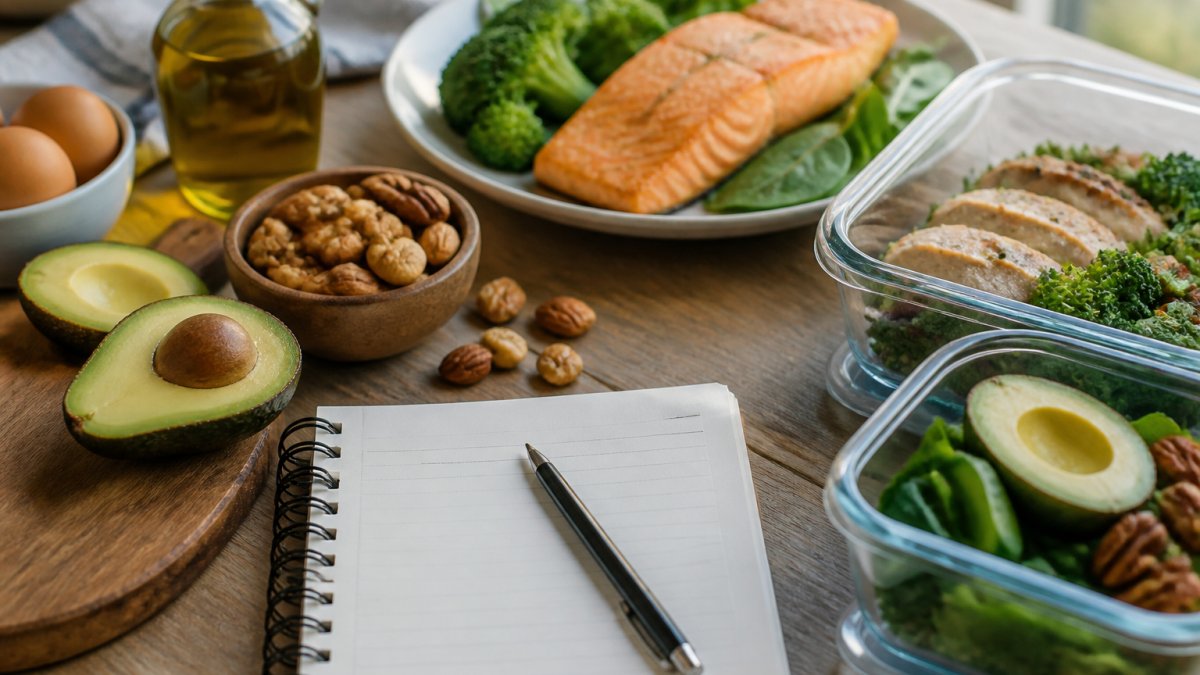
 ultimate-guide
60-Day Keto Weight Loss Plan: A Structured Guide
Table of Contents
- Understanding Ketosis and Your 60-Day Keto Weight Loss Plan
- Daily Carbohydrate Targets: Net Carbs vs Total Carbs
- Your 60-Day Keto Meal Plan: Week-by-Week Structure
- Essential Keto Food List: What to Eat and Avoid
- Keto Meal Prep Strategies for Consistency
- Realistic Keto Weight Loss Results: What to Expect
- Managing Early Side Effects and Staying Healthy
- Staying Consistent and Transitioning After 60 Days
- Frequently Asked Questions
Last Updated: October 12, 2026
Understanding Ketosis and Your 60-Day Keto Weight Loss Plan
Most people who fail at keto wing it: they cut carbs randomly, hit a plateau around week 3, and revert to old patterns.
At Hyper-Ketosis 101, our 60-day bundle addresses this with a step-by-step roadmap and integrated planning and tracking tools, so consistency becomes automatic.
How ketosis works for weight loss
When carbs are restricted, insulin drops, so your body stops storing fat and starts mobilizing it.
The primary driver of weight loss remains a calorie deficit. Keto's real superpower is appetite suppression, which makes that deficit sustainable for 60 days.
Why a structured 60-day approach works
Sixty days is long enough to see meaningful weight loss but short enough to feel achievable.
Structure matters more than duration: weekly milestones keep you engaged, meal plans eliminate decision fatigue, and tracking tools show progress beyond the scale.
Daily Carbohydrate Targets: Net Carbs vs Total Carbs
Net carbs are total carbohydrates minus fiber, the metric most keto practitioners use because fiber doesn't significantly impact blood sugar or ketosis. Total carbs include fiber, tracked by some managing diabetes or blood sugar sensitivity.
For a 60-day keto weight loss plan, net carbs matter more. Fiber passes through largely unchanged, so it doesn't trigger the insulin response that kicks you out of ketosis.
Starting with 20-50 grams per day
After week 2, some increase to 30-50 grams for variety; others stay at 20 grams for the full 60 days.
A common mistake is underestimating carb intake. Nuts, cheese, and low-carb sauces add up quickly. Track everything for at least the first 30 days.
Tracking your daily targets
Use a free food tracking app to log everything for the first month, building awareness of which foods fit your carb budget.
Track net carbs, not total carbs, unless managing blood sugar. Most labels list both, so subtract fiber from total carbs.
Your 60-Day Keto Meal Plan: Week-by-Week Structure
A 60-day keto weight loss plan works best when you know what to eat each week, following a progression that eases you into ketosis, then builds habits around foods you enjoy.

Weeks 1-2: Entering ketosis
Your first two weeks focus on strict carb restriction to trigger ketosis quickly.
Keep meals repetitive, the same breakfast for 10 days removes decision fatigue and eases tracking.
Mild side effects, headaches, fatigue, irritability, typically resolve by day 5-7 with hydration and electrolytes.
Weeks 3-4: Adapting and stabilizing
By week 3, most people are solidly in ketosis and energy stabilizes.
Weight loss slows after the initial phase. This is normal: your body is adjusting to fat burning and water retention stabilizes.
Increased appetite around day 21-25 often signals undereating calories or protein.
Weeks 5-8: Building consistency and momentum
By week 5, keto feels normal, not restrictive.
This phase is about cementing habits: keep meal prepping, rotate favorite meals, and aim for consistency over perfection.
Many report improved mental clarity, stable energy, and reduced cravings, non-scale victories that often matter more than weight loss for adherence.
Essential Keto Food List: What to Eat and Avoid
Your 60-day keto weight loss plan succeeds when you eat foods you enjoy. The best keto diet is one you'll stick to, not the "optimal" one you'll abandon.
Keto-friendly proteins and healthy fats
Proteins anchor every keto meal. Fatty cuts are ideal: beef chuck, pork belly, salmon, whole eggs, full-fat Greek yogurt.
Healthy fats make keto sustainable: butter, ghee, olive oil, avocado oil, and MCT oil.
Omega-3-rich fish (salmon, mackerel, sardines) are a good source of nutrients.
Whole foods, fiber, and nutrient density
Non-starchy vegetables provide fiber, micronutrients, and satiety without disrupting ketosis.
Aim for 25-30 grams of fiber daily from vegetables, nuts, seeds, and whole foods rather than supplements.
Nutrient density separates sustainable keto from crash dieting, and whole foods should form the foundation of your 60 day keto weight loss plan.
Common foods to avoid
Grains (bread, pasta, rice, oats) are off-limits, too high in carbs and blood-sugar spiking. Sugar in any form kicks you out of ketosis.
Seed oils (vegetable, canola, soybean) are technically keto. Stick with butter, ghee, olive oil, avocado oil, and coconut oil.
Keto Meal Prep Strategies for Consistency
Meal prep transforms a 60-day keto weight loss plan from aspirational to achievable. Without it, you're making food decisions multiple times daily when willpower is depleted.
Planning and shopping lists for the week
Spend 30 minutes on Sunday planning your week: 2-3 breakfast, lunch, and dinner options. It isn't rigid, repeat or swap meals, but it gives structure.
Batch cook on Sunday: grill chicken, roast vegetables, cook ground beef, store in glass containers.
Budget-conscious substitutions and batch cooking
Eggs are the cheapest keto protein, a dozen costs less than three chicken breasts and provides complete nutrition.
Frozen vegetables cost less than fresh with identical nutrition, broccoli, spinach, and Brussels sprouts work perfectly in meal prep. Canned fish (sardines, mackerel) is cheaper and shelf-stable.
Adapting meal prep to an irregular schedule
If you can't meal prep Sunday, prep on whatever day works, consistency matters more than the specific day.
If you eat out often, choose strategically: most restaurants have eggs, grilled proteins, and vegetable sides.
Keep emergency keto foods at work and in your car: nuts, cheese, beef jerky, hard-boiled eggs.
Realistic Keto Weight Loss Results: What to Expect
Weight loss on a 60-day keto weight loss plan varies dramatically. Genetics, starting weight, age, activity level, and adherence all influence results.
Weight-loss timelines and individual variability
Weight loss over 60 days varies. These ranges are realistic, not guaranteed.
Weeks 1-2 show the most dramatic initial loss (mostly water and glycogen). Weeks 3-8 show slower, sustainable loss.
Age matters, younger people often lose faster. Women sometimes lose slower than men due to hormonal factors, though this varies.
Tracking progress beyond the scale
The scale tells one story; body composition, energy, clothing fit, and performance tell others.
Take progress photos every two weeks and measure your waist, hips, and chest, these often change when the scale stalls.
Track non-scale victories: better sleep, clearer skin, improved focus, reduced joint pain, stable energy.
Managing expectations and staying motivated
A 60-day keto weight loss plan isn't magic, it's a tool for creating a calorie deficit while minimizing hunger.
Plateaus happen, progress isn't linear, and a stall at week 4-5 is almost universal. It means your body adjusted to your new weight, not that keto stopped working.
Plan beyond day 60.
Managing Early Side Effects and Staying Healthy
The first two weeks of a 60-day keto weight loss plan can feel rough. Understanding what's normal prevents premature quitting.
Electrolytes, hydration, and the first two weeks
"Keto flu" is real but preventable. Headaches, fatigue, irritability, and brain fog typically appear days 3-5 and resolve quickly with proper electrolyte management.
Add salt to meals, aim for 3,000-5,000mg of sodium daily.
Drink when thirsty rather than by a rigid formula, most people naturally drink enough when eating salty foods.
Safety screening and when to consult a clinician
Keto is generally safe for most healthy adults, but a clinician can review your situation, adjust medications if needed, and monitor progress.
Watch for warning signs during your 60 days: persistent severe headaches, chest pain, extreme fatigue, or digestive distress lasting over a week.
Most people feel significantly better by week 3-4, energy up, mental clarity improved, hunger down.
Staying Consistent and Transitioning After 60 Days
A 60-day keto weight loss plan works only if you complete it. Consistency beats perfection.
Tools and systems to maintain your progress
Build personal systems too: schedule meal prep like a non-negotiable appointment, track weight and measurements weekly, and review progress monthly.
Find your accountability structure, a friend doing keto, online communities, or public tracking. Experiment to find what keeps you consistent.
Choosing between continued keto or sustainable alternatives
At day 60, you'll have real data: weight lost, how you felt, whether the lifestyle fit.
There's no single "right" answer, the best diet is one you'll follow.
If you transition off keto, reintroduce carbs gradually over 2-3 weeks.
A structured 60-day keto weight loss plan removes the guesswork from low-carb living. Whether you're entering ketosis for the first time or resetting your metabolism after years of inconsistent eating, our integrated approach helps you start strong, stay consistent, and transition confidently beyond day 60. Research from the American Journal of Clinical Nutrition supports the effectiveness of ketogenic diets for weight loss when combined with behavioral consistency.
| Phase | Duration | Focus | Expected Weight Loss |
|---|---|---|---|
| Weeks 1-2 | Entering Ketosis | Strict carb restriction, electrolyte management | Initial loss (mostly water) |
| Weeks 3-4 | Adaptation | Meal variety, habit formation | Slower, sustainable loss |
| Weeks 5-8 | Consistency | Refined routines, sustainable patterns | Continued loss |
Clinical review on ketogenic diet safety and efficacy confirms that properly managed ketogenic approaches support metabolic health when monitored appropriately.
Frequently Asked Questions
How much weight can I realistically lose in 60 days on keto?
Weight loss varies based on starting weight, metabolism, and adherence. Individual results differ significantly. Initial losses are often higher due to water weight, then stabilize. Consistency with your carb targets and calorie deficit matters more than the specific timeframe. Tracking progress beyond scale weight, like energy levels, clothing fit, and how you feel, provides a fuller picture of your 60-day keto weight loss plan results.
What should I eat during the first week of keto?
Focus on whole foods with protein and healthy fats: eggs, fatty fish, grass-fed beef, full-fat cheese, avocado, olive oil, and non-starchy vegetables like spinach and broccoli. Keep carbs under 20-50 grams per day to enter ketosis quickly. Avoid bread, pasta, sugar, and processed foods. Your first week is about establishing the habit and managing hunger. Simple meals like grilled chicken with butter and salad, or eggs with bacon, work well. Drink plenty of water and consider adding electrolytes to manage early fatigue.
How do I plan keto meals for a week without getting overwhelmed?
Start with 3-4 simple breakfast, lunch, and dinner combinations you enjoy, then repeat them. Choose 2-3 proteins (chicken, beef, fish), 2-3 fat sources (butter, olive oil, avocado), and 3-4 low-carb vegetables. Build a basic shopping list from these staples. Batch-cook proteins and vegetables on Sunday so meals come together in minutes during the week. This approach to keto meal prep removes decision fatigue and keeps you consistent without rigid daily variety. Most people find repetition actually helps them stick to their carb targets.
What metrics should I track beyond the scale during my 60-day plan?
Track energy levels, hunger patterns, sleep quality, and how clothes fit. Take progress photos and body measurements at weeks 0, 4, and 8. Monitor ketone levels if using test strips. Note workout performance and mental clarity. Scale weight alone misses muscle gain, water retention shifts, and non-scale victories that often matter more for long-term motivation. Many people plateau on the scale for weeks while losing inches or feeling dramatically better, these signals matter for staying committed to your 60-day keto weight loss plan.
Can I do keto with an irregular eating schedule or frequent restaurant meals?
Yes, with planning. At restaurants, order protein with vegetables and ask for butter or oil instead of carb-heavy sides. Skip the bread basket and dessert. Most restaurants can accommodate keto requests. For irregular schedules, prepare portable keto snacks: cheese, nuts, hard-boiled eggs, or jerky. Keep your carb targets flexible within your daily limit rather than rigid meal times. The key is knowing your daily carb ceiling and choosing keto-friendly options when you eat out. Your keto meal prep doesn't need to be rigid meal prep, it's about having backup options ready.
What happens if I'm not seeing results by day 30?
First, confirm you're actually in ketosis by checking carb intake (should be under 50g daily) and water intake (often underestimated). Some people take 3-4 weeks to enter ketosis. Check that you're not overeating calories, even keto-friendly foods add up. Take measurements and progress photos; scale weight alone can plateau while body composition changes. If you're tracking consistently and still stuck after 4 weeks, consider adjusting carb targets slightly lower or adding intermittent fasting. Most people see movement by week 4-5. If concerns persist, consult a healthcare provider to rule out metabolic or medical factors.
How do I manage electrolytes and hydration during the first weeks of keto?
Drink at least 2-3 liters of water daily and add electrolytes (sodium, potassium, magnesium) to prevent fatigue and headaches in weeks 1-2. Salt your food generously, eat potassium-rich keto foods like spinach and avocado, or use an electrolyte supplement. Many people underestimate how much sodium they need on keto. Dehydration and electrolyte imbalances cause most early side effects. Start supplementing before symptoms appear. By week 3-4, once your body adapts, most people feel significantly better with steady energy and reduced cravings.
Should I check with a doctor before starting a 60-day keto weight loss plan?
Yes, especially if you have diabetes, heart disease, kidney issues, or take medications that affect blood sugar or electrolytes. Keto is safe for most people but requires monitoring in certain conditions. A clinician can adjust your plan, check baseline labs, and monitor progress. If you're on medication, keto may change your dosage needs. Even without existing conditions, a quick consultation provides peace of mind and ensures your plan fits your health profile. This is particularly important if you've tried keto before and experienced problems.