 listicle
Best Ketosis Planning Tools With Progress Tracking
Table of Contents
- Why Ketosis Planning Tools Need More Than a Carb Counter
- Quick Comparison: Best Ketosis Planning Tools With Progress Tracking
- How We Evaluated These Ketosis Planning Tools
- 1. Hyper-Ketosis 101: Built Around a Structured 60-Day Protocol
- 2. Carb Manager: For Detailed Net Carb and Macro Logging
- 3. Eat This Much: Automated Meal Planning for Rapid Weight Loss
- 4. Cronometer: Precision Tracking for Micronutrients and Ketone Data
- 5. Welling: AI-Assisted Logging for People Who Hate Data Entry
- Frequently Asked Questions
Last Updated: October 16, 2026
Why Ketosis Planning Tools Need More Than a Carb Counter
Most people searching for the best ketosis planning tools with progress tracking assume they need a carb counter. That assumption is the problem. A carb counter tells you what you already ate. It does nothing to tell you what to eat tomorrow, how to structure a strict phase, or whether your body is actually responding.
This guide from Hyper-Ketosis 101 compares five tools on what they actually do well: logging, planning, progress tracking, and how well they fit a structured protocol rather than loose low-carb eating. The 60-day hyper-ketosis protocol runs phase one for rapid weight loss, phase two to lock in results with clean keto eating, and phase three for maintenance. That structure changes what a tracking tool needs to deliver.
Below, each tool gets a verdict, its real strengths, and the honest limitation that decides whether it fits your situation.
Quick Comparison: Best Ketosis Planning Tools With Progress Tracking
| Tool | Free Tier | Best For | Standout Feature |
|---|---|---|---|
| Hyper-Ketosis 101 | No | Structured 60-day protocol | All-in-one guides, planner and cookbook |
| Carb Manager | Yes | Detailed net carb logging | Large low-carb recipe library |
| Eat This Much | Yes | Automated meal planning | Generates plans from macro targets |
| Cronometer | Yes | Micronutrient precision | Verified food database |
| Welling | No | Frictionless logging | AI chat and photo entry |
The pattern is clear: the strongest logging tools are not the strongest planning tools, and none of them were built around a phased protocol.
How We Evaluated These Ketosis Planning Tools
Most roundups rank tools by popularity or by whoever pays for placement. This one uses a transparent rubric so you can see exactly why each tool landed where it did, and so you can re-score them against your own priorities.
Each tool was scored 1-5 on eight criteria, then weighted for what actually matters inside a phased protocol rather than loose low-carb eating:
- Planning depth (weight: high): Does it build meals and grocery lists, or only record what you already ate? A planner that cannot generate a phase one day from a fixed food list fails here.
- Progress tracking beyond food (weight: high): Weight trends, body measurements, adherence streaks, energy notes, and ketone readings, not just a daily macro total.
- Ketone handling (weight: medium): Does the tool log blood, breath, or urine ketone readings directly, or does it only estimate ketosis from carbohydrate intake? These are not the same thing, and the difference matters when you are trying to confirm you are actually in ketosis rather than assuming it.
- Food database quality (weight: high): Verified entries versus crowdsourced ones. Crowdsourced databases drift; verified ones hold their accuracy over time.
- Adherence support (weight: medium): Reminders, streaks, phase-aware prompts, and anything that helps someone stay consistent past week three, when most people quit.
- Fit for a strict phase (weight: high): Can it handle a fixed food list with no oils, fats, or seeds? Most keto tools assume fats are a target to hit, not a category to avoid.
- Data privacy and portability (weight: medium): Can you export your data? Is health data handled transparently? Does it sync with wearables and work across both mobile platforms?
- Cost and free-tier honesty (weight: medium): What is genuinely usable for free, and what sits behind a paywall?
A tool can log perfectly and still fail on planning depth, ketone handling, and strict-phase fit. That gap, between recording food and actually running a protocol, is where most people stall out.
One clarification worth stating up front: a food-logging app estimates ketosis from what you ate. It does not measure ketones. Blood, breath, and urine meters measure ketones directly, and each has limits, blood strips are the most precise but cost per test and require a finger prick; breath meters are non-invasive but less consistent; urine strips are cheap and easy but become less reliable as your body adapts and excretes fewer ketones. No planning tool replaces a meter, and no meter replaces a plan.
1. Hyper-Ketosis 101: Built Around a Structured 60-Day Protocol
Hyper-Ketosis 101 is the top pick because it is the only option here designed around the hyper-ketosis eating protocol itself, not standard keto. The 60-day bundle combines digital guides, a planner, and a cookbook into one system, so planning and tracking live in the same place instead of three apps.
Phase one is the strictest stretch: 40 days, two meals a day, one protein, one fruit, and three or more vegetables, with plenty of water and no oils, fats, or seeds. Walking or swimming is fine; other exercise is not part of this phase. Phase two follows with 20 days of clean keto eating to lock in the loss. Phase three is maintenance, and phases one and two repeat until goal weight.

For anyone overwhelmed by conflicting nutrition advice, the value is the structure itself. There is no daily decision about what fits, because the phase one food list already answers it.
The honest limitation: this is a paid system with no free tier, and it is built for people who want a defined protocol. Anyone who prefers building their own flexible plan will find it more prescriptive than they want. Explore the ebook, planner and cookbook bundle to see how the phases fit together.
2. Carb Manager: For Detailed Net Carb and Macro Logging
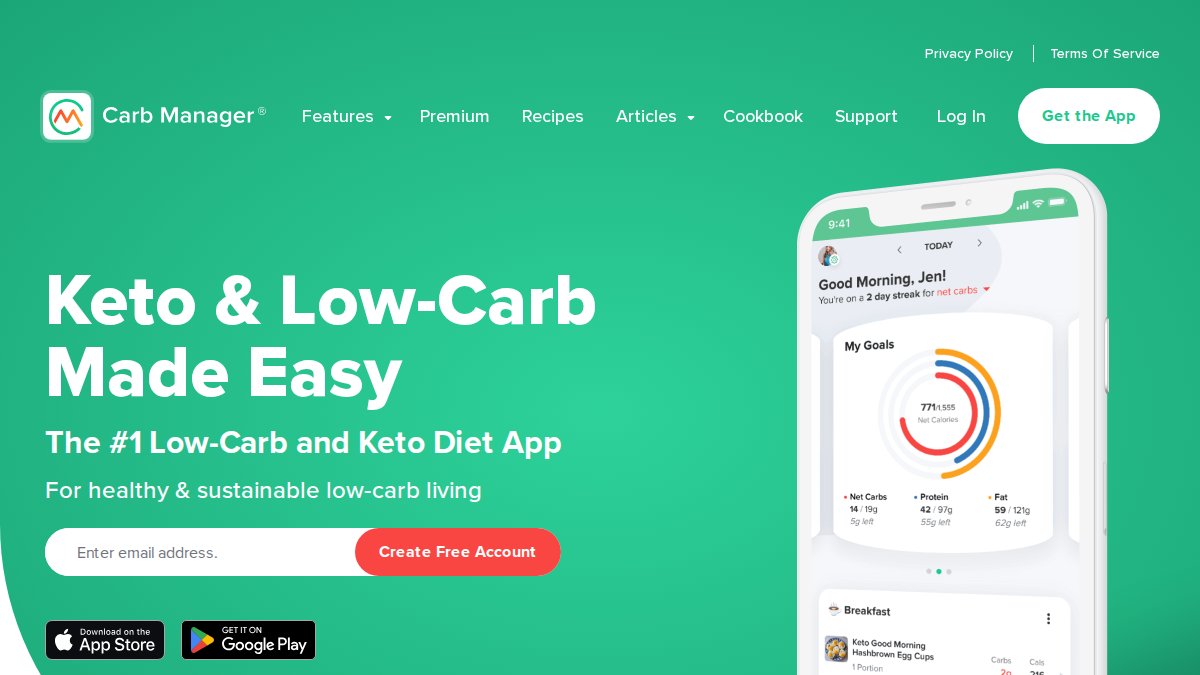
Carb Manager is the strongest pure logger on this list. It tracks net carbs and total carbs separately, scans barcodes, and syncs between web and mobile, which matters when logging happens in a supermarket aisle.
The recipe library is genuinely large, and the food database is more accurate than most crowdsourced alternatives. For someone in phase two or maintenance who already knows what to eat and needs to verify carb counts, it does the job well.
Where it falls short: advanced features sit behind a premium subscription, and it will not build a strict phase one menu for you. It records decisions rather than making them.
3. Eat This Much: Automated Meal Planning for Rapid Weight Loss
Eat This Much flips the model. Instead of logging food, it generates meal plans from your calorie and macro targets, then builds a grocery list from the result.
For meal planning for rapid weight loss, that automation saves real time. Set a target, get a week of meals, shop once.
The catch is precision. Automated plans are built from general macro rules, so a strict phase one food list with no oils, fats, or seeds will need manual adjustment. It is a planning engine, not a protocol.
4. Cronometer: Precision Tracking for Micronutrients and Ketone Data
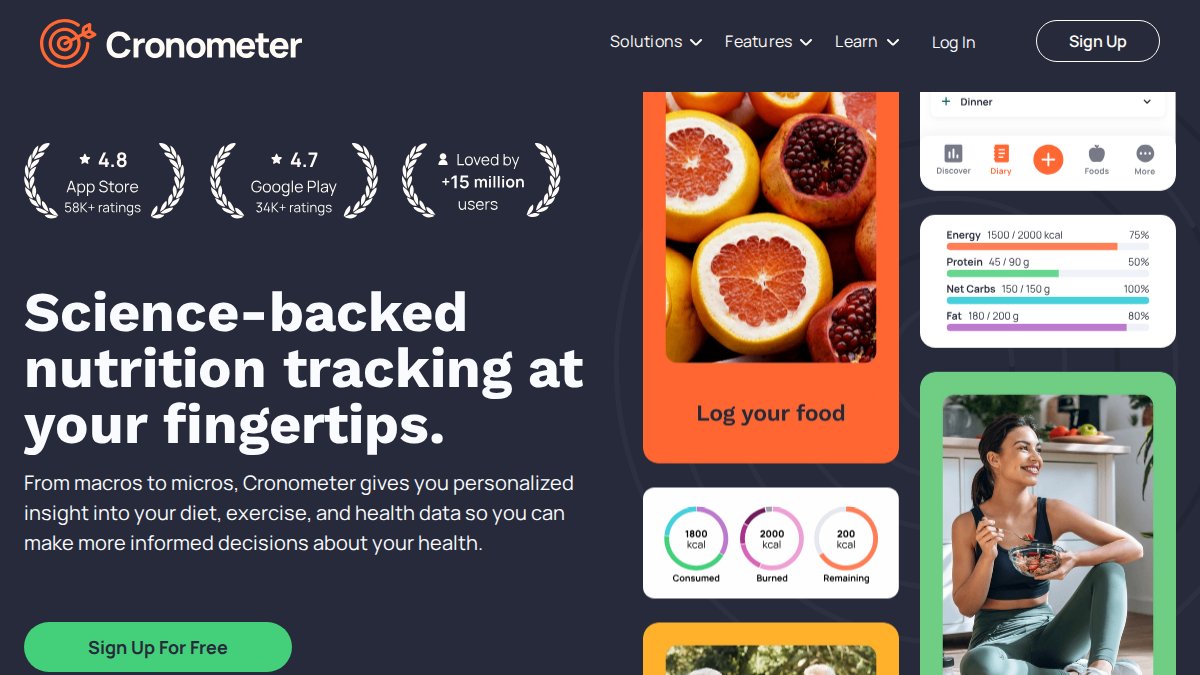
Cronometer is the pick for anyone who wants data integrity. Its food database leans on verified, lab-analyzed entries rather than user-submitted ones, and it tracks micronutrients, vitamins, minerals, electrolytes, alongside macros, which most carb counters ignore entirely. On a strict phase one food list built around one protein, one fruit, and three or more vegetables, that micronutrient view is genuinely useful: it shows whether the limited food list is still covering your bases.
Where Cronometer claims a real gap over the other tools here is progress tracking beyond the food log. Weight, body measurements, and ketone readings can all sit in one dashboard, and it connects to wearable devices so activity and sleep data land in the same place. You can also export your data, which matters if you want to review trends outside the app or share them with a clinician.
On ketones specifically, Cronometer lets you log blood, breath, or urine readings as a biometric entry, but it does not measure ketones itself, and no planning app does. That distinction is worth understanding before you buy a meter:
- Blood ketone meters give the most precise reading of beta-hydroxybutyrate, but each test needs a fresh strip and a finger prick.
- Breath ketone meters measure acetone and are non-invasive, but readings vary more between devices and across the day.
- Urine ketone strips are the cheapest and easiest, but they become less reliable over time as your body adapts and excretes fewer ketones, so a fading strip reading does not necessarily mean you have left ketosis.
A common pattern is to use one method consistently, log it at the same time of day, and read the trend rather than any single number. Cronometer supports that habit well because the readings sit next to your weight and measurement history instead of in a separate app.
The tradeoff is usability. The interface is technical, and beginners often find the density of numbers discouraging rather than motivating. It is also a tracking tool, not a planner, it will not build a phase one menu from a fixed food list, so it works best alongside a structured plan rather than replacing one.
5. Welling: AI-Assisted Logging for People Who Hate Data Entry
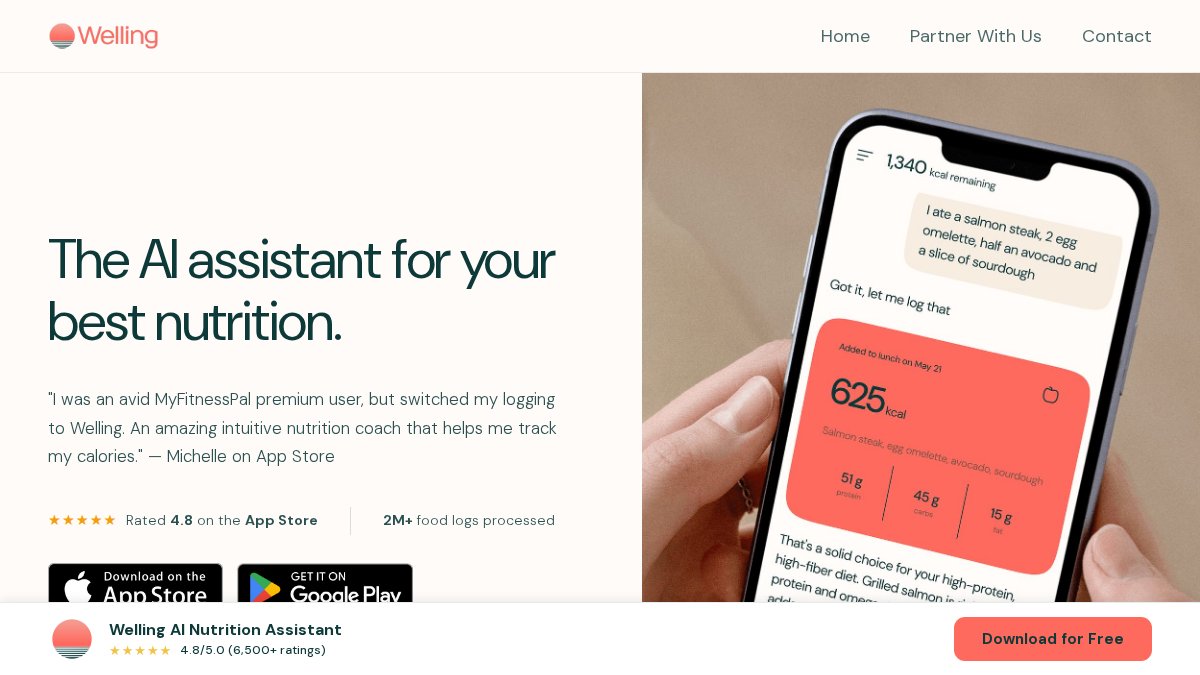
Welling targets the single biggest reason food tracking fails: the logging itself. Meals go in through a chat interface, by text or photo, and the app calculates calories and macros automatically.
If data entry is what breaks your streak, this removes that barrier faster than any manual logger. The conversational format is genuinely quick.
The limitation is depth. There is no free tier, and the tool is built for logging rather than structured planning, so it will not guide a phased protocol.
Frequently Asked Questions
What is the best ketosis planning tool with a meal plan?
It depends on how much structure you want. Hyper-Ketosis 101 bundles a planner, cookbook, and tracking tools around a fixed 60-day protocol, so the meal plan and food list are already set. Carb Manager offers a large recipe library you build from yourself, and Eat This Much generates plans automatically from your targets. If you want less daily decision-making, a bundled protocol is usually easier to follow.
How do you track carbs on keto?
Most apps let you log foods and show net carbs (total carbs minus fiber) alongside total carbs. For a strict protocol, log every item individually rather than relying on combined meals, and weigh portions in grams where you can. Carb Manager and Cronometer both handle net carb and total carb views, while a structured plan like Hyper-Ketosis 101 gives you the phase one food list so you know what to log in the first place.
What is the most accurate way to measure ketosis?
Blood ketone meters give the most direct reading, followed by breath analyzers; urine strips are the cheapest but least consistent as your body adapts. No single method is perfect, and readings vary by time of day and hydration. Use one method consistently and record results alongside your food log so you can see trends rather than chasing single numbers.
How do I track my progress during the 3 phases of hyper-ketosis?
Track more than weight. Log daily food intake, water, and waist measurements, and note energy levels weekly. During phase one (40 days, two meals a day), the scale moves fastest, so weekly weigh-ins plus waist measurements give a clearer picture. In phase two, the 20-day clean keto stretch, weight may hold steady while measurements change. Phase three is maintenance, where the goal is keeping results stable.
Are there apps that support rapid weight loss protocols?
Most mainstream apps are built for general keto, not a fixed rapid-loss structure, so you often have to configure custom targets yourself. Eat This Much lets you set specific calorie and nutrient goals, and Cronometer supports custom dashboards. A purpose-built option like Hyper-Ketosis 101 pairs the phase one food list with planning and tracking tools so you are not rebuilding the protocol inside a generic app.
Staying consistent through a strict phase is the hard part, and most apps leave you to figure out the structure alone. Hyper-Ketosis 101 solves that with a defined 60-day protocol, phase one and phase two food guidance, and an all-in-one bundle that keeps planning, cooking, and tracking in one place. Get started with Hyper-Ketosis 101 and follow the protocol step by step from day one.