 comparison
Phase One Diet Food List vs Keto Food List: Key Differences
Table of Contents
- Phase One Diet Food List vs Keto Food List: The Core Difference
- What a Standard Keto Food List Actually Allows
- The Hyper-Ketosis Phase 1 Food List, Item by Item
- Phase 1 Foods to Avoid That Keto Usually Keeps
- Side-by-Side Comparison: Phase 1 vs Keto Food List
- A Sample Phase 1 Meal Plan for Two Meals a Day
- From Phase 1 to Hyper-Ketosis Phase 2 Clean Keto
- Frequently Asked Questions
Last Updated: October 15, 2026
Phase One Diet Food List vs Keto Food List: The Core Difference
The phase one diet food list vs keto food list comparison comes down to one thing: fat. A standard keto food list builds meals around oils, butter, nuts, seeds, and cheese.
Meals shift toward lean protein, approved fruit, and high-volume vegetables, eaten twice a day.
Most beginners assume all low-carb plans work the same way. They do not.
Below is an item-by-item look at both lists and how the 3:2:1 meal rule structures each plate.
What a Standard Keto Food List Actually Allows
A standard keto food list is built around very low carbohydrate intake with fat supplying most daily calories.
Fats, Oils, Nuts, and Seeds
The Perfect Keto food list guide organizes its categories around meat, vegetables, fruit, seafood, dairy, and then sauces, fats, oils, nuts, and seeds. Those last categories carry real weight in a keto plan.
Standard keto lists commonly include:
- Olive oil, avocado oil, butter, and ghee
- Heavy cream, cream cheese, and most hard cheeses
- Almonds, walnuts, pecans, and macadamia nuts
For a keto dieter these are staples; for Phase 1, almost every item is a stop sign.
The Hyper-Ketosis Phase 1 Food List, Item by Item
The Hyper-Ketosis Phase 1 food list is a strict eating list, not a keto list. It runs 40 days with two meals a day: one lean protein, one approved fruit, and three or more servings of vegetables per meal. No oils, no fats, no seeds.
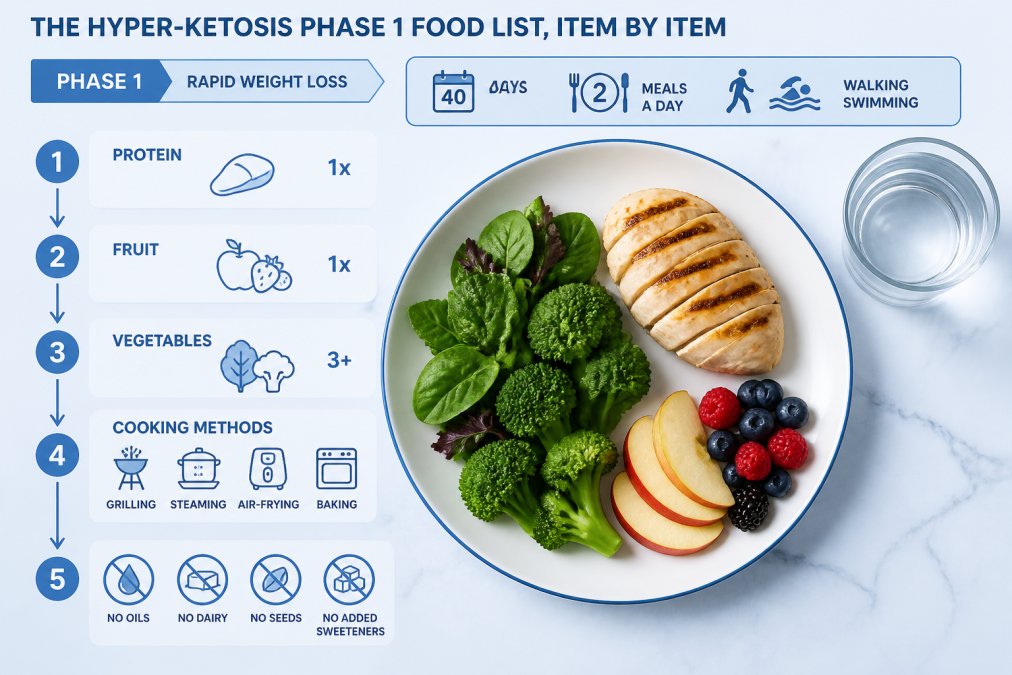
Water intake matters throughout.
Lean Proteins and Approved Fruits
Proteins are lean and cooked without added oil, grilling, steaming, air-frying, or baking, at roughly deck-of-cards size per meal.
- Chicken, skinless
- Turkey and veal
- Buffalo, elk, and venison
Approved fruits are low-glycemic, about tennis-ball size per meal: apples, grapefruit, plums, pears, oranges, lemons, limes, berries, and tomatoes. Watermelon appears once per week only.
Vegetables and the 3:2:1 Meal Rule
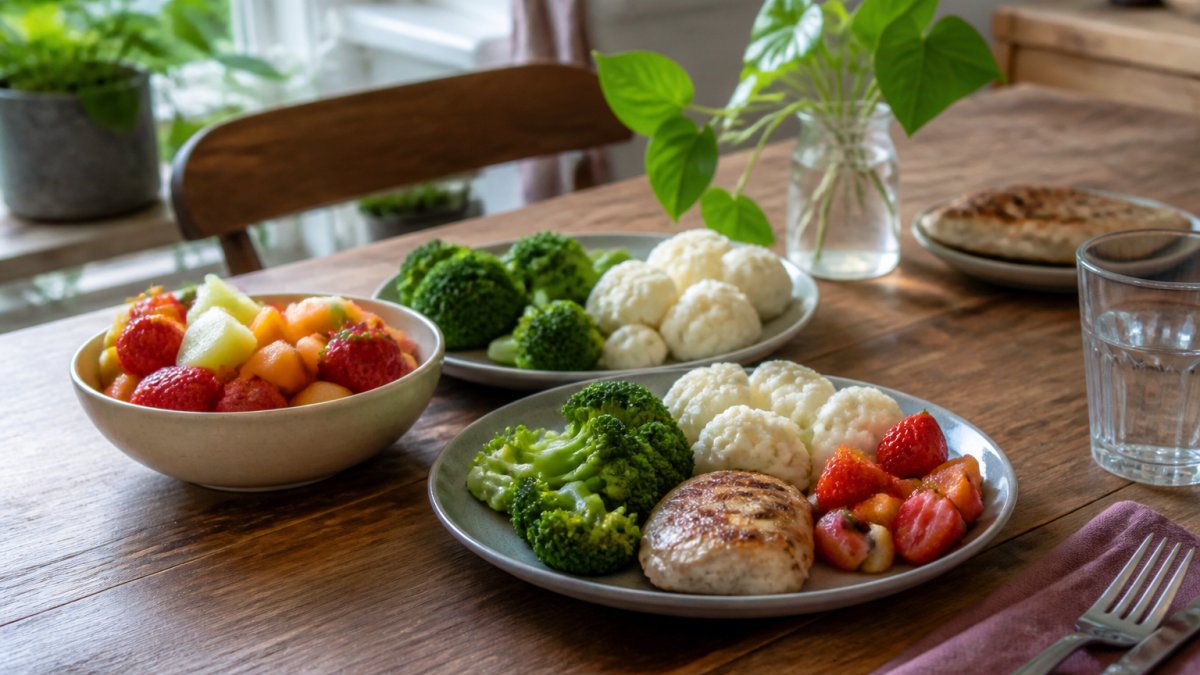
The 3:2:1 rule structures every Phase 1 meal: three or more servings of vegetables, one serving of lean protein, one serving of approved fruit. Each vegetable serving is about tennis-ball size.
High-volume vegetables carry the plate:
- Leafy greens such as spinach, romaine, and kale
- Broccoli and cauliflower
- Zucchini and cucumber
Phase 1 Foods to Avoid That Keto Usually Keeps
Phase 1 foods to avoid are the exact items a keto food list treats as essentials, the sharpest split between the two plans.
The Phase 1 no list is short and absolute:
- No oils of any kind, including olive oil, avocado oil, and butter
- No dairy except cottage cheese once weekly
- No added sweeteners except stevia
A keto dieter reaching for butter to hit a fat target is doing the opposite of what Phase 1 asks. The Atkins low-carb grocery resource shows how a named plan ties its food list to a specific phase rather than treating all low-carb eating as one category, which is the same principle at work here.
Side-by-Side Comparison: Phase 1 vs Keto Food List
The table below answers the comparison directly. Read it as a shopping filter.
| Food Category | Standard Keto List | Hyper-Ketosis Phase 1 List |
|---|---|---|
| Added oils and butter | Encouraged | Not allowed |
| Nuts and seeds | Common staple | Not allowed |
| Cheese and cream | Allowed | Not allowed |
| Cottage cheese | Allowed | Once per week |
| Fatty meats, bacon | Allowed | Lean cuts only |
| Avocado | Allowed | Not allowed |
| Fruit | Limited, mostly berries | Approved low-glycemic fruits daily |
| Vegetables | Low-carb choices | Three or more servings per meal |
| Sweeteners | Sugar-free options | Stevia only |
| Meals per day | Often 2-3 | Two, within an 8-hour window |
The pattern is consistent. Keto adds fat sources. Phase 1 removes them and replaces that volume with vegetables and approved fruit.
A Sample Phase 1 Meal Plan for Two Meals a Day
A Phase 1 meal plan is simple by design: two meals inside an 8-hour eating window, each built on the 3:2:1 rule. Below is a seven-day rotation using only approved Phase 1 foods, cooked with no oils, no fats, and no seeds. Most people run the window from roughly 11 a.m. to 7 p.m., but any consistent 8-hour block works.
The 3:2:1 Rule in Practice
Each meal contains three or more tennis-ball-sized servings of vegetables, one deck-of-cards-sized serving of lean protein, and one tennis-ball-sized serving of approved fruit. That is the entire portion system. No tracking app, no macro math, no scale required.
Seven-Day Phase 1 Meal Rotation
Day 1
- Meal 1: Grilled skinless chicken breast, steamed broccoli, sautéed spinach in water, cucumber and tomato salad, sliced apple
- Meal 2: Baked cod, roasted cauliflower, green beans, romaine salad with lemon juice, mixed berries
Day 2
- Meal 1: Turkey breast, air-fried zucchini, steamed asparagus, kale salad with lime juice, grapefruit
- Meal 2: Shrimp, grilled bell peppers, steamed cabbage, spinach salad, sliced pear
Day 3
- Meal 1: Lean sirloin, roasted broccoli, cucumber salad, sautéed mushrooms in water, orange
- Meal 2: Halibut, steamed green beans, cauliflower rice, romaine salad, strawberries
Day 4
- Meal 1: Whole eggs, steamed spinach, roasted zucchini, tomato salad, sliced apple
- Meal 2: Grilled chicken breast, air-fried Brussels-style cabbage, asparagus, mixed greens, blueberries
Day 5
- Meal 1: Flounder, steamed broccoli, cucumber and tomato salad, sautéed kale in water, grapefruit
- Meal 2: Turkey breast, roasted cauliflower, green beans, romaine salad with lemon, sliced plum
Day 6
- Meal 1: Scallops, steamed asparagus, zucchini noodles, spinach salad, mixed berries
- Meal 2: Lean round roast, roasted bell peppers, steamed cabbage, cucumber salad, sliced pear
Day 7
- Meal 1: Grilled chicken breast, steamed broccoli, sautéed spinach in water, tomato salad, sliced apple
- Meal 2: Baked trout, roasted cauliflower, green beans, kale salad with lime juice, watermelon (once per week only)
Cooking stays to grilling, steaming, air-frying, or baking, no oil in the pan. Lemon and lime juice, herbs, spices, and stevia carry the flavor. Cottage cheese appears once per week at most and can replace a protein serving.
Prep Workflow That Keeps Phase 1 on Track
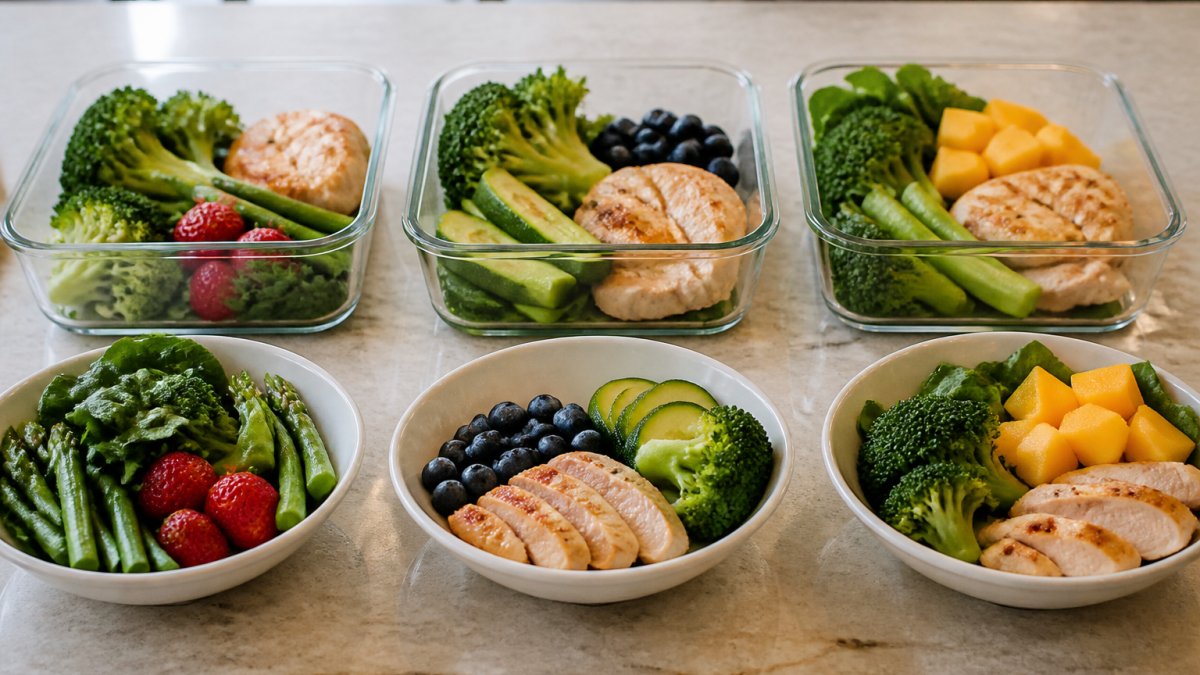
Batch-cook proteins and vegetables twice a week. Grill or bake chicken, cod, and lean beef on Sunday and Wednesday, then steam or roast a tray of broccoli, cauliflower, zucchini, and bell peppers. Portion into containers so each meal is grab-and-assemble. Wash and cut fruit in advance, keeping it separate from vegetables so textures hold, and keep a refilled pitcher of water in the fridge as a visual reminder.
Eating Out and Traveling on Phase 1
Grilled chicken or fish with steamed vegetables and a side of fruit is the default restaurant order. Ask for no oil, no butter, and no sauce, with lemon wedges on the side. At hotels, a grocery stop for pre-cooked chicken, bagged salad, and apples covers most meals. Walking and swimming remain the only approved activity; a 20- to 30-minute walk after each meal supports the plan without the recovery demand of harder training.
Common Phase 1 Meal Mistakes
- Drizzling olive oil on vegetables because it is "keto-friendly", this breaks the no-oils rule
- Skipping the fruit serving to cut carbs further, the fruit is part of the 3:2:1 structure
- Eating three small meals instead of two structured ones, the plan is built on two meals in an 8-hour window
From Phase 1 to Hyper-Ketosis Phase 2 Clean Keto
Hyper-Ketosis Phase 2 clean keto runs 20 days and locks in the weight lost during Phase 1. Fats return selectively through clean keto foods rather than the broader keto list, a controlled reintroduction with its own rules.
What Changes When Phase 1 Ends
Phase 1 runs 40 days with two meals a day, one lean protein, one approved fruit, and three or more servings of vegetables per meal. No oils, no fats, no seeds. Phase 2 keeps the meal structure but loosens the fat restriction in a specific direction.
What returns in Phase 2:
- Healthy fats such as olive oil, avocado oil, and avocado
- Nuts and seeds in measured portions
- Full-fat dairy including cheese, cream, and butter
What stays out in Phase 2:
- Refined sugar and processed sweets
- Grains, bread, pasta, and rice
- Fried foods and processed seed oils
How the Meal Structure Shifts
The 3:2:1 rule belongs to Phase 1. In Phase 2 the plate shifts toward a clean keto ratio: moderate protein, high healthy fat, very low carbohydrate. Vegetables stay high in volume, but fruit narrows to lower-sugar options such as berries.
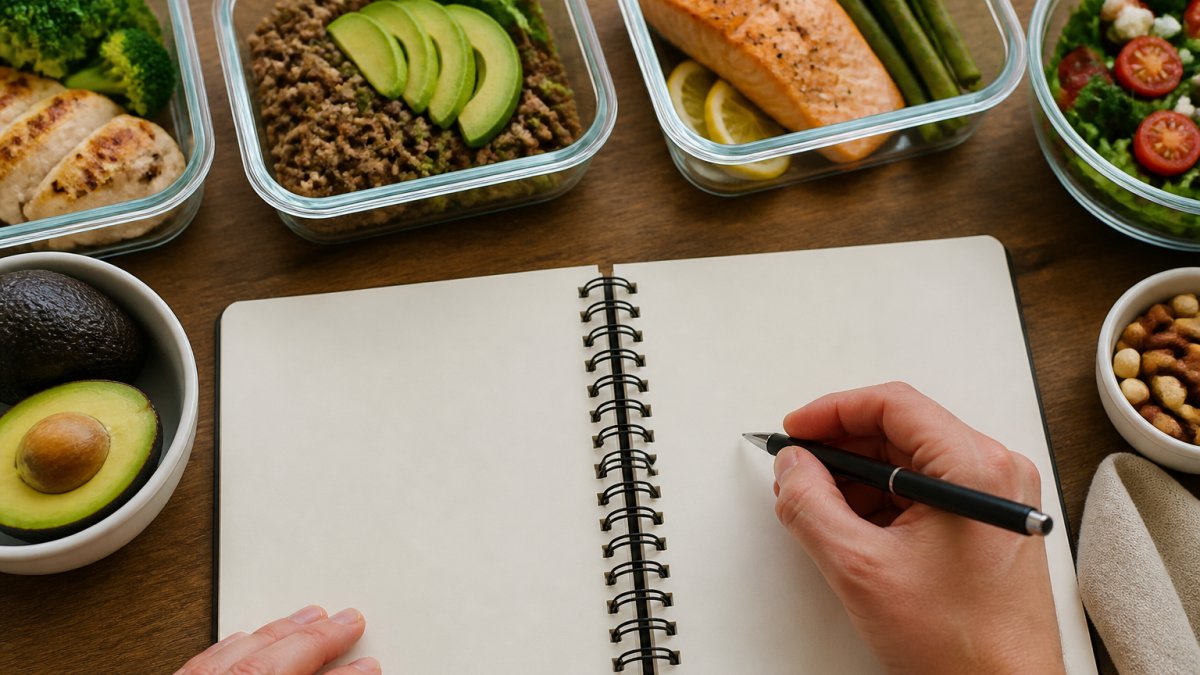
A typical Phase 2 meal: grilled salmon with olive oil, roasted broccoli and cauliflower, a large mixed greens salad with avocado, and a small serving of berries.
Why the Staged Approach Works
Phase 1 triggers rapid fat-burning by removing added fats and leaning on lean protein, approved fruit, and high-volume vegetables. Phase 2 reintroduces fat in a controlled way. Phase 3 is maintenance, where the food list widens while the habits from Phases 1 and 2 hold the result. Phases 1 and 2 repeat until goal weight is reached, then maintenance begins.
Timing the Transition
Most people move from Phase 1 to Phase 2 after the full 40 days, not early. If goal weight is reached during Phase 1, the transition to Phase 2 still happens on schedule to lock in the result.
If goal weight is not reached after Phase 2, the cycle repeats: 40 days of Phase 1, then 20 days of Phase 2, until the target is met, a 60-day system, not a single-phase diet.
What Carries Over From Phase 1
The habits built in Phase 1 carry into Phase 2:
- Two meals a day within an 8-hour eating window
- High vegetable volume at every meal
- Water as the primary drink
Common Transition Mistakes
- Treating Phase 2 as permission to eat any keto-labeled product
- Adding fat faster than the plan allows in the first week of Phase 2
- Dropping vegetables once fat returns, volume still matters
Frequently Asked Questions
What foods are allowed in Phase 1 of the Hyper-Ketosis protocol?
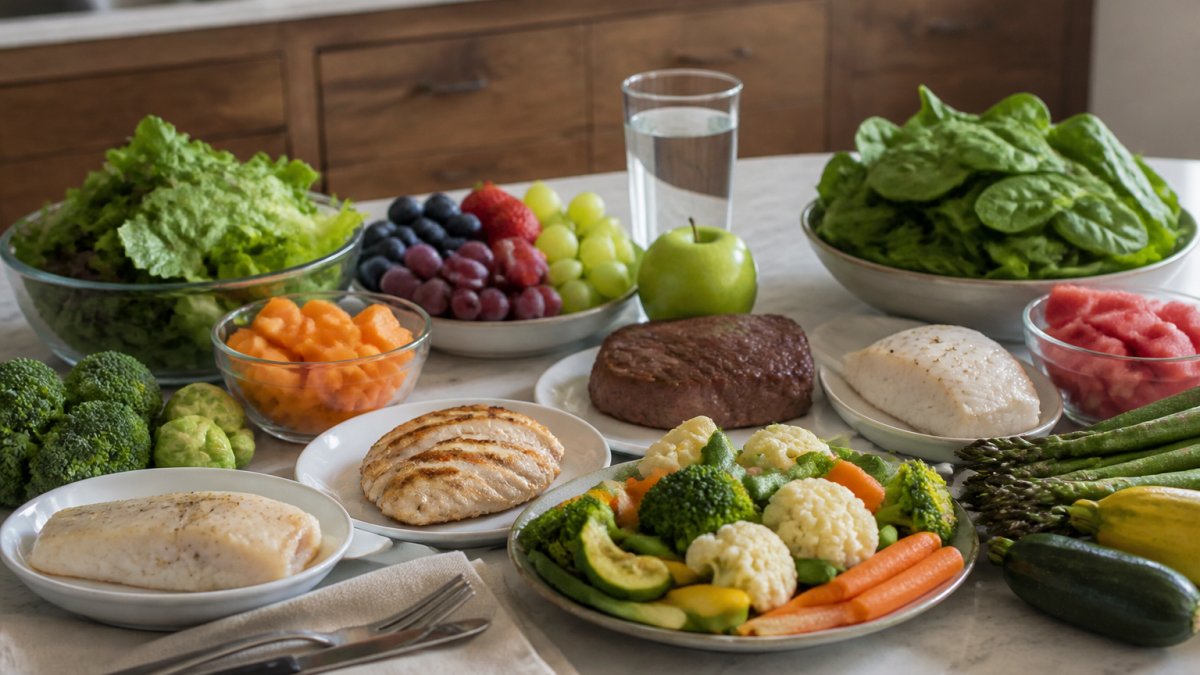
Phase 1 centers on three groups. Lean proteins include skinless chicken, turkey, veal, lean beef cuts like sirloin, seafood such as cod and shrimp, and whole eggs. Approved fruits are low-glycemic options like apples, grapefruit, berries, plums, pears, oranges, lemons, limes, and tomatoes. Vegetables cover leafy greens, broccoli, cauliflower, zucchini, cucumber, bell peppers, asparagus, mushrooms, green beans, and cabbage. Every meal follows the 3:2:1 rule: three or more vegetable servings, one lean protein serving, and one fruit serving.
How is the Phase 1 food list different from a standard keto food list?
A standard keto food list is built around fat: oils, butter, cheese, nuts, seeds, and fatty cuts of meat all appear on it. The phase one food list removes all of those. No oils, no fats, no seeds, and no dairy except cottage cheese once per week. It also adds fruit, which most keto lists restrict heavily. So the phase one food list is a hyper-ketosis eating list, not a keto list with a few items crossed out.
Can you eat fruit on the Hyper-Ketosis Phase 1 plan?
Yes, one serving of approved fruit per meal, sized about the same as a tennis ball. The list includes apples, grapefruit, plums, pears, oranges, lemons, limes, berries, and tomatoes, with watermelon limited to once per week. This is the biggest departure from standard keto, where fruit is usually avoided because of its carbohydrate content. On the Hyper-Ketosis Phase 1 food list, that single fruit serving is part of the 3:2:1 rule at every meal.
Are oils, butter, or dairy allowed in Phase 1?
No. Phase 1 bans all oils, including olive oil and avocado oil, along with butter and every dairy product except cottage cheese, which is limited to once per week. Cooking methods are grilling, steaming, air-frying, and baking, so food is prepared without added fat. This is one of the clearest splits from a keto food list, where fats and oils supply most of the daily calories. Phase 1 gets its structure from lean protein, vegetables, and fruit instead.
What happens after Phase 1 ends?
Phase 1 runs for 40 days, then you move into Hyper-Ketosis Phase 2 clean keto for 20 days to lock in the weight loss. Phase 2 is where clean keto foods return, so the stricter Phase 1 rules ease. After Phase 2 you continue cycling phases one and two until you reach your goal weight, then move into Phase 3 maintenance. The full sequence, with planning and tracking tools, is laid out in the Hyper-Ketosis 101 ebook, planner, and cookbook combo.
The hard part is not understanding the difference between the two lists. It is holding the Phase 1 rules for 40 straight days without drifting back toward old keto habits. Hyper-Ketosis 101 structures that stretch with a 60-day bundle, a full food list, and planning and tracking tools that keep each meal on the 3:2:1 pattern. Get started with Hyper-Ketosis 101 and move through Phase 1 and Phase 2 with a plan that tells you exactly what goes on the plate.